10 Best Cable Management Tools Tips for Global Buyers
Choosing the right cable management tools can shape the safety, appearance, and service life of any installation. Global buyers often compare clips, sleeves, trays, ties, raceways, and labeling systems across different suppliers. The lowest price rarely tells the full story. Material quality, load capacity, heat resistance, installation method, and replacement availability matter just as much.
A practical purchasing review should reflect real working conditions. In a busy server room, a poorly secured cable bundle can block airflow or complicate maintenance. Under a standing desk, weak adhesive may loosen after repeated adjustments. Outdoor projects demand stronger protection against moisture, sunlight, and temperature changes. These details help buyers match each tool with its actual environment, rather than choosing from product photos alone.
This guide examines ten useful cable management tools and offers practical tips for international purchasing decisions. It considers supplier credibility, product specifications, packaging, sample testing, and communication quality. Certifications and technical documents should be checked carefully, not assumed. Small errors happen, even in experienced teams. A sample may perform well but fail during larger production runs. That is why clear requirements, inspection records, and realistic testing remain essential. Reliable suppliers should explain limitations honestly and support consistent quality across shipments. This approach helps buyers reduce rework, protect equipment, and build cleaner installations with confidence.
Map Cable Types and Volumes Before Buying; Reserve 30% Spare Capacity
10 Best Cable Management Tools Tips for Global Buyers
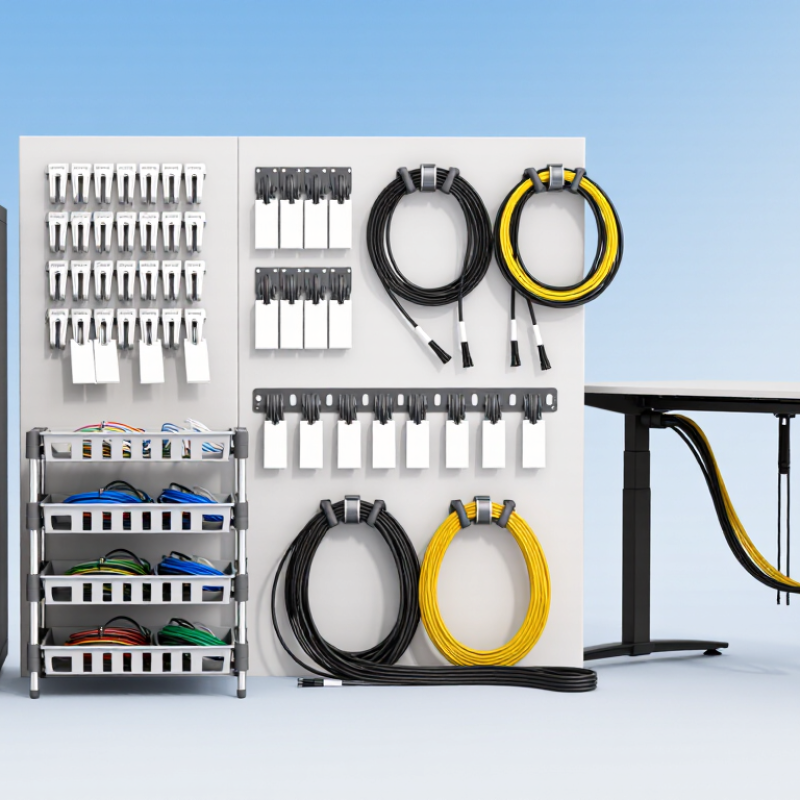
Before buying cable management tools, map every cable type and volume in your installation. Record power, data, control, and fiber cables separately. Measure outer diameter, length, bend radius, and connector size. A simple table prevents expensive guesses. Include cables already installed and those planned for expansion.
Use actual counts, not packaging estimates. For example, a tray holding 80 cables may need space for 104. Reserve at least 30% spare capacity for growth, rerouting, and easier maintenance. This space also reduces pressure on cable jackets and supports proper bending. Keep power and signal cables separated where the system design requires it. Check the manufacturer’s load ratings, material performance, and temperature range before selection.
During site work, I have seen narrow clips fail because cable bundles grew unexpectedly. My earlier purchasing mistake was measuring length but ignoring diameter. It created wasted stock and slow installation. Now, I test one small section before ordering larger quantities. Choose tools that match the map, such as trays, conduits, clips, labels, and pull-through accessories. Confirm measurements in millimeters and use clear drawings for suppliers in different regions. Keep photos beside the cable schedule. They reveal details that spreadsheets miss. Small errors remain possible. Review the plan with an installer before payment.
Rank 10 Cable Tools by TIA-568.2-D Compatibility and Bend-Radius Control
10 Best Cable Management Tools Tips for Global Buyers
For installers, tool choice affects TIA-568.2-D performance and bend-radius control. My practical ranking starts with a cable certification tester, because it verifies insertion loss, return loss, and pair balance after installation. A bend-radius gauge follows closely, helping prevent tight turns near outlets and panels. Third is a smooth cable pathway brush, which reduces snagging during pulls. Fourth is a calibrated termination tool for consistent contact displacement. A jacket stripper ranks fifth when it limits damage to insulation and pair geometry. Sixth is a cable comb, useful for straight, low-stress routing. Seventh is a hook-and-loop strap system, which avoids crushing cable bundles. Eighth is a compact side cutter with clean, controlled cuts. Ninth is a plug preparation tool, when the connector system permits field termination. Tenth is a pull-tension meter for sensitive or long routes.
Tips: Check the cable manufacturer’s minimum bend radius before using any tool. TIA-568.2-D supports reliable balanced cabling, but tools do not create compliance alone. Measure the finished channel, not only the individual link. Keep twists close to the termination point. Leave service loops with wide, gradual curves.
In field work, I have seen neat-looking bundles fail testing after excessive strap pressure. Appearance can mislead. A tool may feel precise yet remove too much jacket. Global buyers should compare calibration records, material quality, replacement parts, and training requirements. A perfect ranking is impossible because cable diameter, connector design, and installation space vary. That limitation deserves attention.
Select Trays and Ducts by IEC 61537 Load Ratings and IEC 60529 IP Codes
Choosing cable management tools for global projects requires more than comparing prices. Trays and ducts should match the installation environment, cable weight, and maintenance plan. IEC 61537 provides a useful basis for evaluating cable tray and ladder systems.
Check the declared load rating, support span, deflection limits, and test conditions. A tray rated for 150 kilograms per metre may require supports at a specific distance. Changing that distance can reduce real performance.
Read the details carefully. Load capacity is not a universal number. It depends on installation direction, accessories, fasteners, and cable distribution.
An experienced installer should inspect joints, bends, and vertical sections, where stress often increases. Do not guess. A strong-looking tray can still fail under uneven loading.
For ducts, IEC 60529 IP codes help define protection against dust and water. IP54 may suit sheltered industrial areas, while washdown zones may require a higher water-protection level.
The first digit addresses solid-object protection; the second addresses water ingress. Check covers, seals, cable entries, and unused openings, not only the printed rating.
Field conditions can differ from laboratory testing. That is easy to overlook. Ask for test reports, installation guidance, and material information before approval.
Also confirm corrosion resistance, temperature limits, and local electrical requirements. A practical review may reveal that the cheapest duct needs more sealing work, replacement parts, or inspection time.
Screen Ties, Sleeves, and Labels for RoHS, REACH, and UL 94 Compliance
Global cable management requires more than a tidy installation. Screen ties, braided sleeves, and identification labels should support safety, traceability, and regulatory review. RoHS addresses restricted substances in electrical products, while REACH concerns chemical substances and supply-chain communication. UL 94 evaluates the flammability behavior of plastic materials. These requirements apply differently, so buyers should check each component’s material declaration and test documentation.
Tips: Select screen ties with clear material specifications. Use sleeves that resist abrasion, heat, and expected chemical exposure. Print labels with permanent ink, then test them after bending, wiping, and temperature changes. Keep supplier declarations, batch numbers, and applicable test reports together. A label that peels after installation creates a costly traceability gap.
A practical check is simple. Wrap a sample harness around the smallest expected bend radius. Inspect the sleeve for flattening, exposed conductors, or loose fibers. Confirm that the label remains readable near connectors and grounding points.
Do not assume a UL 94 rating covers the complete assembly; it usually describes a specific material or part. That distinction matters. Inconsistent documentation is still common, even with experienced suppliers. Buyers should verify revision dates and compare documents with the actual shipped materials.
A neat harness can still fail a review. Keep evidence.
Compare Global Suppliers by MOQ, Lead Time, Warranty, and 5-Year TCO
Global buyers should compare cable management suppliers beyond unit price. A practical ten-item shortlist includes cable trays, raceways, spiral wraps, braided sleeves, hook-and-loop straps, reusable ties, adhesive clips, mounting bases, cable glands, and identification labels. Check material quality, load rating, temperature range, and installation speed. The cheapest clip can fail when dust weakens its adhesive.
MOQ affects cash flow and storage risk. A supplier offering 500 pieces may suit a pilot project better than one requiring 20,000. Lead time matters just as much. Ask for production time, inspection time, shipping time, and realistic delay allowances. Get these details in writing. A seven-day promise may exclude weekends, tooling, or customs clearance.
Warranty terms need careful reading. Confirm coverage length, replacement procedures, testing evidence, and exclusions for heat, chemicals, or outdoor exposure. For five-year TCO, include purchase cost, freight, installation labor, replacements, downtime, disposal, and inventory holding. A durable sleeve may cost twice as much but reduce yearly maintenance. That is not always true. Test a small batch first. Compare failure rates after vibration, bending, and repeated access. A spreadsheet helps, but field feedback remains essential. Suppliers with traceable inspections and responsive technical support usually reduce hidden risk, even when their MOQ is higher.
Related Posts
-
How to Choose the Best Cable Management Tools for Your Workspace
-

Top 10 Cable Management Solutions for a Neat Workspace?
-

2026 Top Cable Management Solutions for Businesses Worldwide?
-
Exploring Innovative Alternatives for Effective Wire Management Solutions
-
Challenges Faced by Businesses Using Ineffective Cable Management Tools
-
Maximize Efficiency: The Top 7 Cable Management Tools to Enhance Workstation Productivity by 30%