How to Choose a Fiber Termination Kit in 2026?
Choosing a fiber termination kit in 2026 requires more than comparing prices or counting tools. The right kit must match your cable type, connector system, installation environment, and repair workload. A field technician may need a compact kit for ladder work, while a data-center team may require inspection, polishing, cleaning, and testing tools in one protected case. Small details matter. A loose adapter can damage a connector endface.
Jim Hayes, president of the Fiber Optic Association and a respected fiber-optics educator, puts it plainly: “Cleanliness is the most important part of fiber optic termination.” His guidance reflects daily installation experience. Dust, oil, and careless handling can create insertion loss, reflection, and repeated service calls. A quality fiber termination kit should therefore include dependable stripping tools, precision cleavers, connector crimping equipment, cleaning supplies, and a microscope or inspection scope. It should also support the fiber types and connectors used on your project.
Do not trust every product description.
A kit can look complete yet lack a suitable cleaver or compatible consumables. I have seen teams select attractive cases, then discover that replacement blades are difficult to source. That mistake costs time. This guide examines tool accuracy, connector compatibility, portability, safety, training needs, and long-term support. It also considers an uncomfortable question: do you need a full kit, or only selected professional tools? The best choice is not always the largest one. It is the kit that produces clean, repeatable terminations under real working conditions.
Fiber Termination Kits: Definition, Purpose, and Main Components
How to Choose a Fiber Termination Kit in 2026?
Fiber Termination Kits: Definition, Purpose, and Main Components
A fiber termination kit contains tools for preparing, connecting, inspecting, and testing optical fiber. Its purpose is simple: create a clean, low-loss connection between the cable and connector. Demand is rising with network expansion.
The ITU Facts and Figures 2024 report estimated 5.5 billion people were online, equal to 68% of the global population. The OECD Broadband Data 2024 also showed fiber represented about 42% of fixed broadband connections across OECD countries.
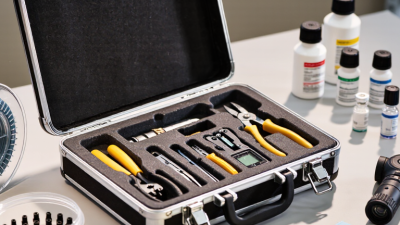
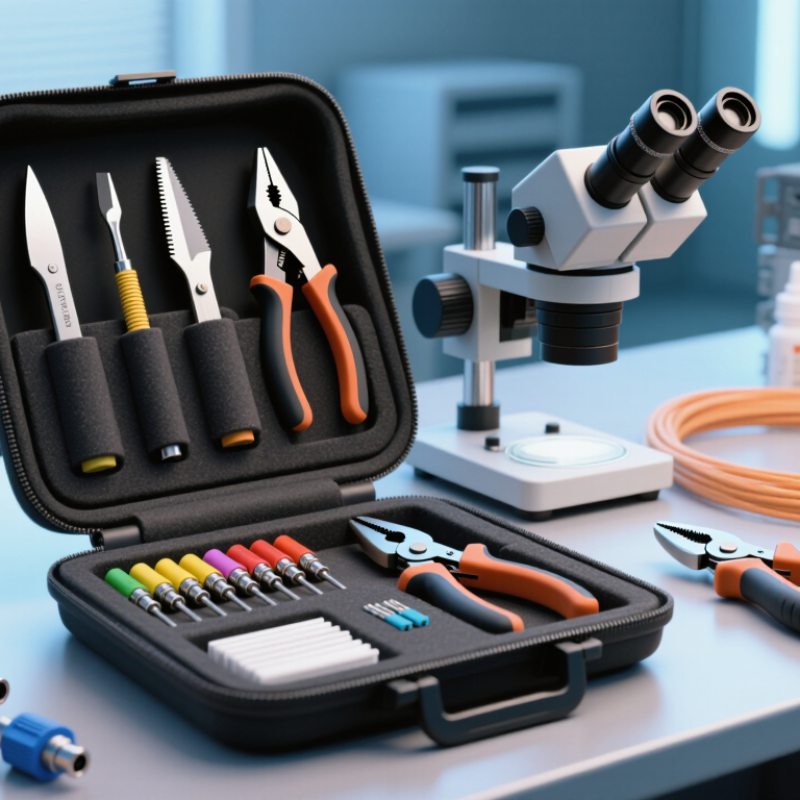
A practical kit usually includes a cable stripper, precision cleaver, connector crimper, polishing films, and a fiber inspection scope. Many kits also include lint-free wipes, cleaning fluid, a visual fault locator, and an optical power meter. For fusion-splicing work, a splice holder and fiber preparation tools are essential, but the splicer itself may be purchased separately.
Check the fiber type, connector format, cable diameter, and expected installation volume before choosing. Small field jobs need portability. Production environments need repeatable results.
Cleanliness matters more than impressive packaging. A single dust particle can increase insertion loss or damage an adapter. FOA technical guidance repeatedly emphasizes inspection, cleaning, and end-face verification before connection. A kit can look complete and still miss a reliable inspection method. That is an easy mistake.
In 2026, choose measurable performance over tool quantity, and confirm that replacement blades, polishing films, and test accessories remain available. No kit is perfect. Your installation conditions decide the right compromise.
Assess Fiber Type, Connector Design, and Termination Requirements
Choosing a fiber termination kit starts with the cable, not the tool case. Check whether the installation uses single-mode or multimode fiber. Match the kit’s cleaver and consumables accordingly. Single-mode work demands tighter cleave quality. Small end-face errors can increase loss across long links. Multimode systems may tolerate more variation. Poor cleaning remains unacceptable. In field inspections, dust on connector faces often causes unstable readings. Clean every end face.
Connector design changes the termination process. A push-pull connector kit may not support crimp-style or splice-based terminations. Confirm the connector type, ferrule size, polish method, and cable jacket diameter before purchasing. Some kits include inspection scopes, curing ovens, polishing films, and visual fault tools. Others contain only basic hand tools. If the enclosure is crowded, choose tools with short handles and controlled access. That detail is easy to miss.
Termination requirements should reflect the actual site. For a small repair, a compact kit can reduce setup time. For repeated installations, choose replaceable blades and consistent crimp control. Clear instructions also matter. Use a calibrated light source and power meter to verify insertion loss after termination. Check connector end faces before every measurement. Training matters too. A complete kit still fails when technicians skip curing or inspection. I have seen teams choose by price, then purchase missing adapters later. That choice looked efficient. It was not. Leave room for revision.
How to Choose a Fiber Termination Kit in 2026?
Assess fiber type first, then confirm connector design and the required termination method.
Fiber type
OS2 single-mode fiber is commonly specified as 9/125 µm. OM3, OM4, and OM5 multimode fibers are commonly specified as 50/125 µm.
Connector design
Choose a kit that matches simplex, duplex, or multi-fiber connector assemblies and provides the correct ferrule, polishing, inspection, and cleaning tools.
Termination requirements
For field work, verify compatibility with mechanical termination or fusion-splice workflows, fiber coating sizes, cleaving needs, and end-face inspection requirements.
Reference dimensions shown are standard nominal fiber geometry values: core diameter / cladding diameter in micrometres.
Compare Kit Tools, Materials, Compatibility, and Build Quality
Choosing a fiber termination kit in 2026 requires more than counting tools. Examine the cleaver, stripping tools, crimping system, inspection scope, and cleaning supplies. A stable cleaver should produce consistent fiber ends with minimal movement. The stripper must remove coatings without scratching glass. Small defects can create large insertion losses.
Materials matter during daily installation. Look for hardened cutting surfaces, corrosion-resistant metal, and a durable case with protected tool slots. Alcohol wipes, lint-free swabs, dust caps, and polishing films should be sealed properly. Cheap consumables often leave residue or shed fibers. That detail is easy to miss.
Compatibility deserves careful checking. Confirm the kit supports the fiber type, connector style, coating diameter, and cable construction used in your project. Some kits handle single-fiber work well but feel awkward with ribbon fiber. Others include adapters that do not fit common inspection equipment. Verify every interface before purchase.
Build quality appears during repetitive work. Handles should remain firm after dozens of crimps, and hinges should not develop side play. I usually test the cleaver lock and inspect spare blades before committing to a kit. A heavier case is not automatically better. It may simply waste space. My own mistake was choosing a large kit with impressive contents but weak cleaning supplies. That choice slowed every termination. A practical kit should make alignment, inspection, cleaning, and rework easier under real site conditions.
Verify Kit Completeness, Safety Standards, and Long-Term Support
How to Choose a Fiber Termination Kit in 2026?
A complete fiber termination kit should support the entire workflow, not just the final connector. Check for a calibrated cleaver, fiber stripper, precision scissors, cleaning wipes, lint-free swabs, and an inspection scope. A visual fault locator is also useful for identifying bends and poor connections. Confirm that the kit includes adapters for your fiber type and connector format. Missing small parts can delay an installation for hours.
Safety deserves equal attention. The kit should include protective eyewear, a fiber shard container, and clear disposal instructions. Verify that optical safety guidance follows recognized requirements, such as IEC 60825-1. Cleaning fluids should have accessible safety data sheets and secure containers. Never inspect an active fiber end directly. It seems obvious, yet rushed technicians still make this mistake. Good instructions should explain safe handling in plain language.
Think beyond the purchase date. Ask whether replacement cleaver blades, wipes, adapters, and protective caps will remain available. Check calibration procedures, warranty terms, technical support, and training resources. A kit may perform well today but become difficult to maintain later. Support promises can also be vague. Request written details. Review the manual before buying, not after opening the case. Even a careful checklist can miss compatibility issues, especially when networks combine older and newer components. That uncertainty deserves a practical test with sample fibers.