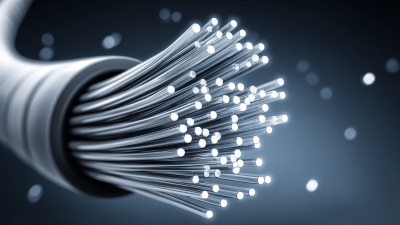
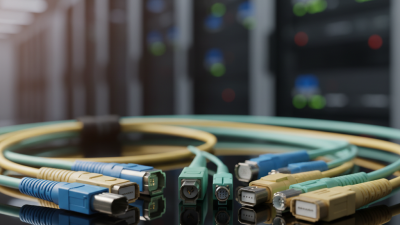
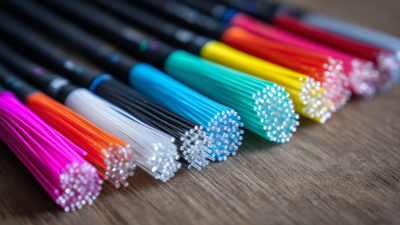
What Are the Top Types of Fiber Cable?
Fiber cable is not a single product. It is a family of designs built for different distances, bandwidth needs, and installation conditions. The OECD’s June 2023 broadband statistics reported that fiber made up 42.9% of fixed broadband subscriptions across member countries. That growth makes choosing the right cable more than a technical detail. It affects signal reach, upgrade options, and the practical cost of installation. Charles K. Kao, the Nobel Prize-winning pioneer of optical communications, argued that low-loss glass fiber could make long-distance optical communication practical. His insight still shapes network design today.
This guide explores the main types, including single-mode and multimode fiber, plus simplex, duplex, and specialized outdoor or armored constructions. Single-mode fiber typically carries light over longer distances, while multimode fiber is commonly used for shorter links, such as connections within buildings. But labels alone do not settle a purchase. Connector type, cable rating, bend limits, and the path through a building all matter. A tight corner behind a rack can be enough to complicate an otherwise sound installation. That matters. Fiber selection also involves trade-offs, and specifications can look clearer on paper than they do on site. The sections ahead compare common cable types, explain where each fits, and flag details worth checking before installation. One honest caveat: no single type is best for every network.
Single-Mode Fiber: Design, Performance, and Common Uses
Single-mode fiber carries light through a tiny glass core, typically about 9 micrometers wide, surrounded by 125-micrometer cladding. Its narrow core guides one main propagation mode, reducing modal dispersion over long distances. Very small core. Light normally enters from a laser-based transmitter, so alignment and connector cleanliness matter during installation.
ITU-T Recommendation G.652.D specifies key characteristics for widely deployed single-mode fiber, including transmission across wavelength bands used around 1310 and 1550 nanometers. At 1550 nm, attenuation can be as low as 0.3 dB per kilometer under the recommendation’s specified conditions. That low loss helps explain its use in long-haul networks, metro links, and fiber-to-the-home access routes. In practice, actual reach depends on connector loss, splices, bends, and the optical budget—not fiber type alone.
For example, a technician joining two cables in a roadside cabinet must keep the fiber ends clean and minimize bend stress. Poor handling can erase some of the advantage of low attenuation. Single-mode systems also support wavelength-division multiplexing, which sends multiple signals through one strand at different wavelengths. That matters. Yet maximum distance is not the only design goal: transceiver cost, repair access, and future capacity affect the choice. One easy-to-miss limitation is that single-mode fiber requires compatible optics; mixing components without checking specifications can cause unreliable links.
Multimode Fiber: Core Sizes, Variants, and Applications
Multimode fiber carries light through a wider core than single-mode fiber, allowing multiple light paths to travel at once. Common core diameters are 50 and 62.5 micrometers. Core size matters, but it does not determine reach on its own; fiber grade, wavelength, and connected equipment also affect performance.
OM1 fiber typically has a 62.5-micrometer core, while OM2 through OM5 use 50-micrometer cores. OM3 and OM4 are laser-optimized options often used for higher-speed links over moderate building distances. OM5 supports multiple wavelengths in the 850-to-950-nanometer range, which can suit certain short-reach designs. Check the equipment specifications before choosing. Labels can be confusing.
In offices and data rooms, multimode fiber commonly connects switches, servers, and storage across floors or within a building. Its wider core can make alignment and connector handling less exacting, though clean end faces remain essential. A dusty connector can weaken a link. For example, a link between two racks may work well with OM4, but the required speed and distance should be checked against both transceivers’ limits. Older installed cabling may use OM1 or OM2, so replacement planning should account for the existing fiber type and connector condition.
Plastic Optical Fiber: Short-Range Uses and Limitations
Plastic optical fiber (POF) suits short links where flexible routing and quick termination matter more than long-distance reach. Its comparatively large core can make alignment easier during installation, especially inside vehicles, appliances, and compact control cabinets. Practical does not mean unlimited. POF generally has higher signal loss than glass fiber, so cable length, bends, and connector quality can quickly affect performance.
IEEE 802.3bv-2017 specifies 1 Gb/s transmission over POF for links up to 50 meters. That is a useful engineering benchmark, not a guarantee for every cable or installation. The standard’s reach depends on a compliant link and suitable components.
IEC 60793-2-40:2021 also classifies plastic optical fibers within its A4 category, helping distinguish them from glass-fiber types. Keep runs short, avoid tight bends, and test the finished link under real operating conditions.
I would still leave margin below the stated limit; field connections are rarely as tidy as a lab setup.
Armored Fiber Cable: Construction, Protection, and Deployment
Armored fiber cable adds a protective layer around optical fibers, helping resist crushing, rodents, and accidental knocks. Its construction typically includes fiber strands, strength members, an inner jacket, armor, and an outer jacket. Armor may be corrugated metal or a nonmetallic material. The right choice depends on the route and site conditions. Metal armor can provide strong physical protection, but it adds weight and may require bonding or grounding according to the cable design and installation plan. Protection has trade-offs.
Tips: Check the cable’s bend-radius and pulling-tension limits before installation. Keep it away from sharp edges, and inspect the jacket for cuts after pulling. Small details matter.
For outdoor ducts, industrial spaces, or exposed runs, armored cable can reduce damage risks and costly repairs. Match the jacket to moisture, temperature, and chemical exposure; armor alone does not make every cable suitable for every environment. During deployment, use compatible glands and closures, and avoid tight bends near trays or equipment. A common oversight is choosing heavy armor where a lighter design would work. Extra protection can make handling harder and consume more space. Review the route, entry points, and maintenance access before specifying the cable.
Fiber Cable Types: Representative Fiber Counts
Fiber count varies by design. These examples show how common cable constructions can serve different connection and capacity needs.
Armored fiber cable adds a protective layer, such as corrugated steel tape or interlocking armor, to help resist crushing and physical damage. Armor does not determine fiber count; actual counts vary by product and application.