2026 Top Trends in Fiber Network Cable Technology and Its Applications?
In 2026, the fiber network cable landscape is set to evolve significantly. By 2025, the global fiber optic cable market will surpass $11 billion, reflecting a 10% growth rate. This trend highlights the increasing demand for high-speed internet and reliable connectivity across various sectors.
Businesses are prioritizing fiber network cables to enhance communication. They offer higher bandwidth and lower latency compared to traditional copper cables. As more companies adopt remote work, the need for robust data transmission becomes crucial. Yet, challenges remain. Deployment costs and installation complexity can hinder progress.
Moreover, advancements in technology, such as 5G and IoT, will drive further adoption of fiber networks. Companies must address scalability and integration issues to fully leverage these innovations. As the fiber network landscape transforms, awareness of industry trends and challenges will be essential for success.

2026 Fiber Network Cable Technology: Overview of Current Trends
Fiber network cable technology continues to evolve rapidly, shaping connectivity across various sectors. High bandwidth requirements are driving demand for advanced fiber optics. These developments enhance internet speeds and improve data transmission efficiency. Many industries, such as healthcare and education, rely on these innovations. They demand reliable connections and real-time data sharing capabilities.
Recent trends show a shift toward more flexible cabling solutions. Manufacturers are focusing on lighter, easier-to-install cables. This change tackles installation challenges in complex environments. Adoption of the latest connector designs enhances compatibility. However, these changes may introduce concerns about durability. Technicians often face difficulties during installation, requiring adequate training.
Sustainability has gained importance in cable manufacturing. Eco-friendly materials are now preferred. This approach minimizes environmental impacts but can lead to higher production costs. Stakeholders are still grappling with the balance between sustainability and affordability. As technology advances, continued reflection on these priorities becomes essential for the industry’s growth.
2026 Fiber Network Cable Technology: Current Trends and Applications
Advancements in Fiber Optic Materials and Their Impact on Performance
Advancements in fiber optic materials are revolutionizing the telecommunications landscape. New materials enhance the transmission capabilities and reduce signal loss over long distances. For instance, the introduction of advanced glass formulations can significantly improve the light-carrying capacity. This allows for higher data transfer rates, meeting the demands of modern applications.
Moreover, innovations in coating and cabling systems contribute to better durability and flexibility. These enhancements enable fiber networks to perform well even in challenging environments. However, manufacturers face challenges in balancing performance and cost. Some solutions may not be economically feasible for wider adoption, risking technological inequality.
The impact of these advancements is noteworthy. With improved materials, we can expect faster internet speeds and more reliable connections. Yet, reflections on sustainability are essential. The production processes of new materials can raise environmental concerns. As the industry progresses, striking a balance between innovation and ecological responsibility remains crucial.
2026 Top Trends in Fiber Network Cable Technology and Its Applications
| Trend |
Description |
Impact on Performance |
Applications |
| Enhanced Fiber Materials |
New fiber compositions that improve durability and reduce attenuation. |
Increased signal quality over longer distances. |
Telecommunications, Data Centers |
| High-Count Fiber Cables |
Cables containing a higher number of fibers to support growing data demands. |
Enhanced bandwidth and capacity. |
Internet Infrastructure, Cloud Computing |
| Wireless Fiber Optics |
Integration of fiber optics with wireless technology to improve connectivity. |
Greater flexibility in network design. |
Smart Cities, IoT Applications |
| Flexible and Bend-Insensitive Fiber |
Fibers designed to retain performance despite bending. |
Reduced losses in installations. |
Indoor Networking, Telecommunications |
| Integration with AI and Machine Learning |
Using AI to optimize fiber network performance and diagnostics. |
Improved uptime and error correction. |
Network Management, Autonomous Systems |
Emerging Applications of Fiber Networks in IoT and Smart Cities
The rapid evolution of fiber networks plays a crucial role in the development of IoT and smart cities. With dense urban populations, the demand for high-speed, reliable connections is critical. Fiber optic cables facilitate this connectivity, enabling fast data transfer for countless devices. These networks allow smart traffic systems to function smoothly, reducing congestion and improving safety on city roads.
In smart cities, fiber networks support various applications. For example, real-time environmental monitoring relies heavily on these connections. Sensors, collecting air quality or noise data, send information instantly through fiber links. This data can inform city officials about potential issues, like polluted areas or excessive noise.
However, implementing such systems may face challenges. Costs and infrastructure gaps can hinder progress in underdeveloped regions.
Moreover, security concerns remain a significant challenge. As cities become smarter, the risk of cyberattacks increases. Protecting sensitive data transmitted via fiber networks is essential. These issues warrant deeper discussions among stakeholders. Exploring innovative solutions and methods to strengthen fiber networks can address these challenges.
The path toward fully integrated smart cities is still evolving, with room for progress and reflection.
Market Growth Projections for Fiber Network Installations by 2026
The fiber network installation market is set to experience significant growth by 2026. More organizations are choosing fiber optics for faster and more reliable internet. The increasing demand for high-speed connectivity is a key driver of this growth. Applications span across various sectors, including healthcare, education, and smart city infrastructures. Fiber networks enhance data transfer rates and support large volumes of users.
However, challenges remain. Installation costs can be high, especially for rural areas. There is often a skill gap in the workforce familiar with fiber technology. As more installations happen, the need for skilled technicians will grow. This potential shortage may slow down the pace of deployment.
In addition, the environmental impact of fiber production is under scrutiny. Sustainable practices in manufacturing and laying fiber cables need focus. It is essential for the industry to address these concerns while meeting the rising demand. Balancing growth with responsibility will be crucial in the coming years.
Challenges and Solutions in Fiber Network Deployment and Maintenance
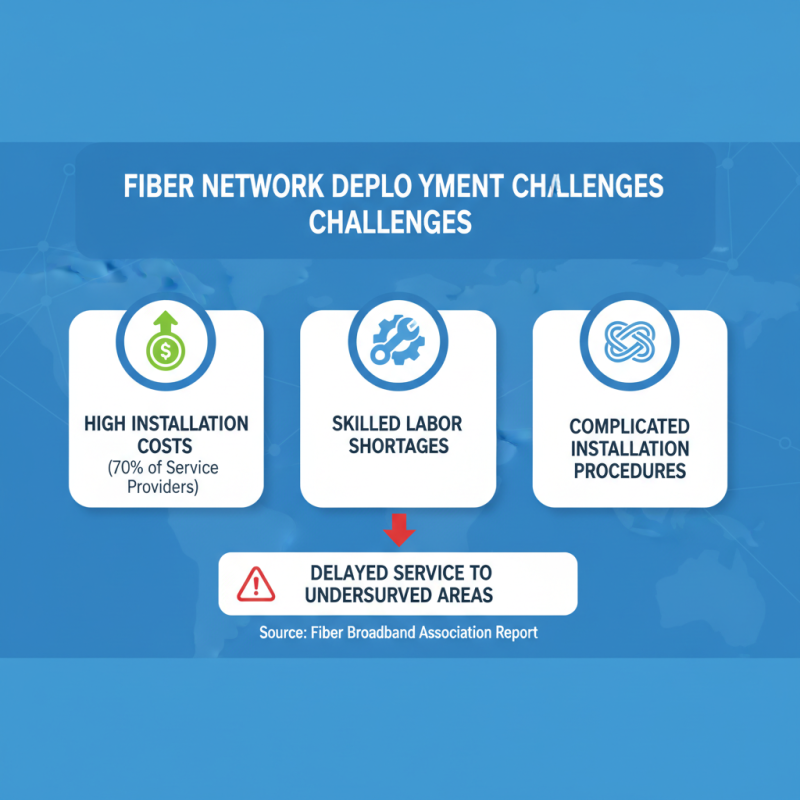
The rapid deployment of fiber network technology faces various challenges. According to a recent report by Fiber Broadband Association, nearly 70% of service providers cite high installation costs as a significant barrier. This often leads to delays in providing service to underserved areas. Additionally, skilled labor shortages further complicate the deployment process. Complicated installation procedures can create frustrations for both workers and customers.
Maintenance is another area of concern. As networks expand, the complexity of keeping them operational increases. A study by the Institute of Electrical and Electronics Engineers (IEEE) indicated that over 60% of network outages are attributed to poor maintenance practices. Regular monitoring and proactive maintenance strategies are essential. However, many providers lack the necessary tools or trained personnel.
Emerging solutions can help address these issues. Automated monitoring systems can streamline maintenance tasks. Enhanced training programs for technicians can mitigate labor shortages. These innovations could pave the way for more efficient deployments, yet many challenges still require attention. The industry must reflect on these shortcomings to ensure a more robust and reliable fiber network future.