What Are the Best Coax Connectors from China?
Choosing the best coax connectors from China requires more than comparing prices or polished product photos. It demands careful attention to materials, machining accuracy, electrical performance, and supplier reliability. In practical sourcing, small details matter. A loose coupling nut, uneven plating, or weak center pin can cause signal loss and early failure.
Reliable manufacturers usually provide clear specifications for impedance, frequency range, return loss, insertion loss, and operating temperature. They should also explain whether connectors use brass, stainless steel, or other approved materials. Testing reports, production samples, and traceable quality records offer stronger evidence than marketing claims. Relevant standards, including IEC or industry-specific requirements, can help buyers compare products consistently. However, certification alone is not enough.
This guide examines coax connectors for applications such as antennas, wireless equipment, CCTV systems, and laboratory testing. It considers common types, including SMA, BNC, N-type, F-type, and TNC connectors. Supplier audits, sample inspections, and repeated mating tests can reveal problems that catalogs hide. Ask for drawings. Request samples. Check the fit by hand. Then verify performance with suitable test equipment. Some suppliers may offer excellent connectors but inconsistent batches, which is an important weakness to recognize. The “best” option is therefore not always the cheapest or most famous product. It is the connector that matches your technical needs, installation conditions, and quality expectations. Careful comparison creates a more dependable purchasing decision.
Chinese Coaxial Connector Types and Their Common Applications
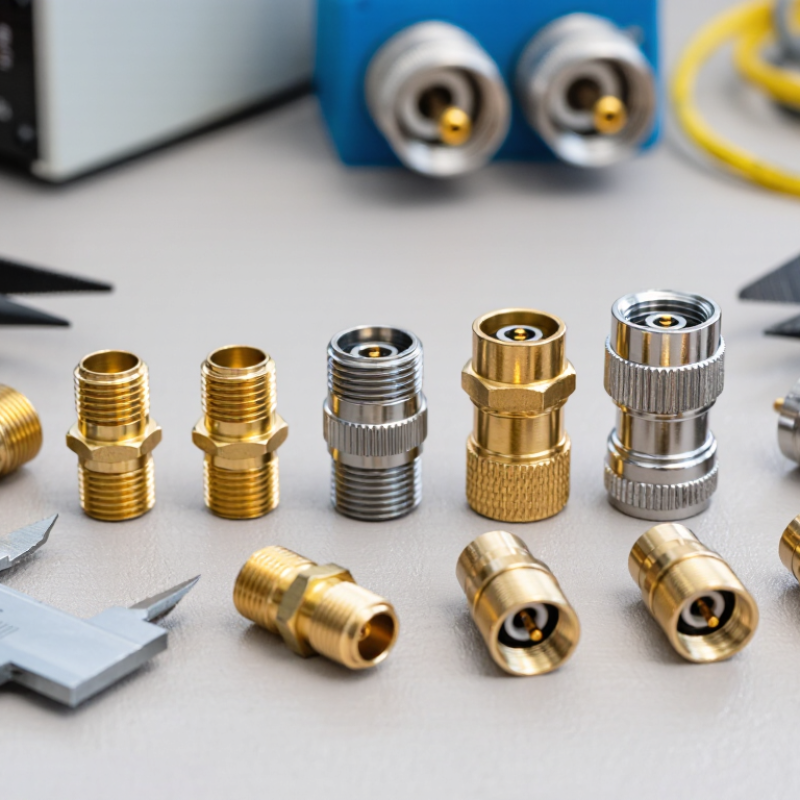
Chinese coaxial connectors cover several distinct electrical and mechanical needs. F connectors use a screw thread and usually support 75-ohm television, cable, and satellite systems. BNC connectors use a bayonet lock, making them practical for test instruments, cameras, and broadcast equipment. TNC connectors add a thread for better vibration resistance. SMA and N connectors commonly serve 50-ohm wireless, microwave, base-station, and industrial radio systems. Compact SMB, MCX, and MMCX types fit GPS modules, routers, and embedded devices.
MarketsandMarkets’ 2024 RF connector report identifies telecommunications as a leading application and forecasts continued mid-single-digit growth. That demand rewards suppliers with stable impedance control. IEC 61169 standards also define important interface requirements for many coaxial connector families.
In procurement checks, buyers should request return-loss, VSWR, insertion-loss, and mating-cycle data. These numbers matter more than polished catalog photos.
Outdoor projects need extra scrutiny. N-type connectors may require sealing, corrosion-resistant plating, and verified IP performance. High-power systems may need 7/16 DIN designs, not smaller threaded parts. A practical sourcing lesson is simple: match the connector to the cable first. A 50-ohm connector on a 75-ohm assembly can create avoidable reflections. I still verify both sides. The weak point is often the cable, not the connector. Supplier test reports, sample inspection, and dimensional checks can expose small errors before volume production. Reports from Bishop & Associates also show how connector demand follows data, communications, and industrial equipment investment, but market forecasts remain estimates. That uncertainty deserves attention.
Key Standards for Evaluating Coaxial Connectors from China
What Are the Best Coax Connectors from China?
Key Standards for Evaluating Coaxial Connectors from China
Selecting a coaxial connector from China requires more than comparing unit prices. Start with the required impedance, usually 50 or 75 ohms, and match it with the cable and equipment. Confirm the operating frequency, voltage rating, and temperature range. Small mismatches can create visible signal loss.
Check return loss, VSWR, insertion loss, and shielding effectiveness through documented test reports. A connector may look excellent. Its performance still depends on machining accuracy, dielectric alignment, and contact pressure. Ask for measurements from production samples, not only laboratory prototypes. Practical inspections should also examine plating thickness, surface defects, thread fit, and center-pin retention.
Material selection matters. Copper alloys support conductivity, while suitable plating helps resist corrosion and repeated mating. Sealing performance should be verified with an appropriate ingress test when outdoor use is expected. Request dimensional drawings, batch records, inspection criteria, and traceability documents. Independent testing can strengthen confidence, especially for critical installations.
Do not overlook assembly consistency. I have seen connectors pass visual inspection yet fail after several mating cycles. That experience supports a stricter sampling plan. One weakness remains: supplier documents may use different test conditions, making comparisons unfair. Recheck frequency, cable type, fixtures, and calibration status before accepting results. A clear tolerance table is often more valuable than a polished catalogue. Safety and material declarations should also match the destination market’s requirements.
Best Chinese Coaxial Connectors for Different Frequency Ranges
The best Chinese coaxial connectors depend on frequency, not appearance. For low and mid-band systems, N and TNC connectors suit outdoor wireless equipment. They commonly support DC to 6 GHz applications. Their threaded bodies resist vibration and moisture when properly sealed. SMA connectors are practical for compact devices, usually reaching 18 GHz with suitable construction. However, small size can increase installation mistakes.
For 18 to 40 GHz systems, 2.92 mm and 2.4 mm connectors offer better high-frequency performance. They require tighter machining and cleaner interfaces. A 0.01 mm dimensional error can affect impedance stability.
MarketsandMarkets reported continued growth in the global RF connector market, driven by wireless infrastructure and test equipment. Grand View Research also identified rising demand for high-frequency connectors in telecommunications and aerospace applications.
These reports support careful selection, but they cannot replace laboratory verification. IEC 61169 guidance and MIL-STD-202 environmental tests provide useful reference points. Still, a catalog rating is not proof of field reliability.
Tips:
Check VSWR, insertion loss, plating thickness, and cable compatibility. Request test curves, not only maximum frequency claims. Inspect the center pin under magnification.
I have seen visually polished connectors fail after repeated mating cycles. That weakness deserves attention.
For outdoor use, test salt mist, vibration, and temperature changes. For 5G or microwave assemblies, use torque-controlled tools and calibrated equipment. Chinese manufacturers can provide excellent precision, but quality varies between production batches. An independent sample inspection remains sensible.
Materials, Plating, and Manufacturing Quality to Compare
What Are the Best Coax Connectors from China?
Materials, plating, and manufacturing quality deserve close attention when comparing coax connectors from China. Brass bodies offer good machinability and moderate cost. Stainless steel provides stronger corrosion resistance but usually costs more. For spring contacts, phosphor bronze can maintain reliable pressure after repeated mating. Material choice should match frequency, environment, and installation force.
Plating changes both durability and signal stability. Gold plating helps resist oxidation on contact surfaces. Nickel often protects the connector body and supports a harder finish. Tin can reduce cost, but it may need better environmental protection. Ask for plating thickness, not only the word “gold.” A bright surface proves very little. Cross-section checks and coating tests provide stronger evidence.
Manufacturing quality appears in small details. Threads should turn smoothly without metal dust. Center pins must stay straight and remain firmly held in the insulator. The connector should maintain stable contact resistance after mating cycles. In production, inspect dimensions with calibrated gauges and test return loss across the required frequency range. Weather-exposed parts also need salt-spray or humidity testing. ISO documentation is useful, but it cannot replace sample inspection. I have seen attractive connectors fail because the plating was uneven inside the mating area. That mistake is easy to miss. Even experienced buyers can overtrust a clean sample. Ask for batch records, material certificates, and independent test results before approving volume production.
How to Choose a Reliable Chinese Coaxial Connector Supplier
What Are the Best Coax Connectors from China?
Choosing a reliable Chinese coaxial connector supplier requires more than comparing prices. Start with the connector’s application, frequency range, impedance, and installation environment. A 50-ohm connector for wireless equipment may fail in a 75-ohm broadcast system. Request complete drawings, material specifications, and test results before discussing volume orders.
Look for a supplier with proven manufacturing experience. Ask whether production is performed in-house or outsourced. A trustworthy factory should explain its machining, plating, assembly, and inspection processes clearly. Request samples from the same production line used for future orders. Check thread accuracy, contact alignment, surface finish, and cable retention by hand. Small defects matter.
Ask for inspection records covering return loss, insertion loss, voltage standing wave ratio, and mechanical durability. Independent laboratory reports can add confidence, but verify their dates and test conditions. Compliance documents should match the exact connector model, not a similar item. Supplier audits are useful, although no audit is perfect. I would still inspect packaging, labeling, and batch traceability.
Communication also reveals reliability. Can the supplier answer technical questions without vague promises? Does it report tooling changes before production? A clear corrective-action process is essential when samples fail. The cheapest quotation may hide unstable plating thickness or inconsistent dimensions. I once treated a polished sample as enough evidence; that was a poor assumption. A dependable supplier welcomes repeat testing, written specifications, and realistic lead times.
What Are the Best Coax Connectors from China? - How to Choose a Reliable Chinese Coaxial Connector Supplier
| Connector Type | Typical Impedance | Typical Frequency Capability | Coupling Method | Common Cable Compatibility | Typical Applications | Key Supplier Verification Points |
|---|---|---|---|---|---|---|
| SMA | 50 ohms | DC to 18 GHz is common; precision versions can support higher frequencies | Threaded coupling | RG-316, RG-178, 0.141-inch semi-rigid and other small-diameter coaxial cables | Wireless modules, antennas, test equipment, GPS and industrial electronics | Confirm interface dimensions, VSWR at the required frequency, plating thickness, center-contact retention and cable-specific crimp tooling |
| N-Type | 50 or 75 ohms | Common 50-ohm designs support up to 11 GHz; performance depends on the exact interface | Threaded coupling | RG-8, RG-213, RG-58, LMR-type and low-loss outdoor coaxial cables | Base-station antennas, wireless infrastructure, outdoor RF systems and surge-protection assemblies | Check sealing design, IP rating, return loss, torque recommendation, contact plating and outdoor salt-spray performance |
| BNC | 50 or 75 ohms | Common versions operate from DC to 1 GHz; specialized versions may reach approximately 4 GHz | Bayonet coupling | RG-58, RG-59, RG-62, RG-174 and similar flexible coaxial cables | Oscilloscopes, cameras, video equipment, control systems and laboratory instruments | Verify 50-ohm or 75-ohm configuration, bayonet locking force, insertion loss, cable preparation dimensions and mating-cycle test results |
| TNC | 50 ohms | Common designs operate from DC to 11 GHz | Threaded coupling | RG-58, RG-223, RG-316 and other small- to medium-diameter coaxial cables | Mobile communications, vehicle antennas, navigation systems and vibration-prone equipment | Request vibration-test data, thread-gauge inspection records, RF test reports and confirmation of the specified cable clamp design |
| F-Type | 75 ohms | Common versions support up to 1 GHz or 3 GHz, depending on construction | Threaded coupling | RG-6, RG-59 and other 75-ohm television and broadband coaxial cables | Cable television, satellite reception, broadband networks and residential distribution | Check center-conductor compatibility, compression or crimp tooling, shielding effectiveness, corrosion resistance and outdoor weather sealing |
| UHF / PL-Type | Nominally 50 ohms; not a constant-impedance interface | Generally used below 300 MHz, subject to application-specific limits | Threaded coupling | RG-8, RG-213, RG-58 and other medium- or large-diameter coaxial cables | Amateur radio, low-frequency communications and legacy RF equipment | Confirm that the connector is suitable for the operating frequency, verify contact pressure, cable entry size, solder quality and corrosion protection |
| 7/16 DIN | 50 ohms | Commonly used through approximately 6 GHz; exact limits depend on the design | Large threaded coupling | 1/2-inch, 7/8-inch and other low-loss feeder cables | High-power cellular infrastructure, broadcast systems and outdoor feeder networks | Require power-rating data, PIM test results, weatherproofing verification, contact-material details and dimensional inspection reports |
| 2.92 mm | 50 ohms | Typically DC to 40 GHz | Threaded coupling | 0.047-inch, 0.086-inch and other precision microwave cables | Millimeter-wave testing, radar development, aerospace equipment and high-frequency instrumentation | Ask for calibrated VNA test data, interface-gauge records, phase-stability results, connector cleanliness controls and precision machining tolerances |
| Supplier Evaluation Dimension | Reliable Evidence to Request | Recommended Acceptance Criteria |
|---|---|---|
| Standards and drawings | Controlled product drawings, applicable IEC, MIL or industry-interface references and revision history | Every critical dimension, material and tolerance is clearly documented before production |
| RF performance | Vector network analyzer reports showing return loss, VSWR and insertion loss across the required frequency range | Test limits match the project specification, with traceable equipment calibration |
| Materials and plating | Material declarations, plating-thickness records and RoHS or REACH documentation where required | Material and plating specifications are consistent across samples, purchase orders and inspection reports |
| Mechanical durability | Mating-cycle, cable-retention, vibration and torque test results | The connector maintains mechanical integrity and RF performance after the specified test cycles |
| Environmental protection | IP-rating evidence, temperature range, humidity, salt-spray and water-ingress test reports | Environmental ratings are verified on the exact configuration, including cable assembly and sealing accessories |
| Quality control | Incoming-material inspection, in-process inspection, final inspection and sampling-plan records | Critical characteristics have defined inspection methods, traceability and corrective-action procedures |
| Sample approval | Pre-production samples, dimensional reports and independent or third-party test results when necessary | The approved sample is linked to the production drawing and cannot be changed without written approval |
| Production and delivery | Manufacturing lead time, minimum order quantity, packaging specification and replacement policy | Commercial terms, packaging controls and nonconforming-product responsibilities are agreed in writing |
Note: Frequency, VSWR, power, IP and environmental ratings vary by construction, cable size, termination method and test conditions. Always verify the exact part configuration before purchase.
Related Posts
-
10 Best Coax Connectors for Global Buyers?
-
How to Choose the Right Coax Connectors for Your Needs?
-
China Top Coax Tools Guide for Professionals and DIY Enthusiasts?
-
Top Coax Adapters for Global Buyers Which Are Best?
-
How to Choose the Right Coax Adapters for Global Sourcing?
-
How to Choose the Right EZ RJ45 Connectors?