China Best Wire Cable Manufacturers and Suppliers?
China has become a major sourcing center for wire cable used in construction, energy, telecommunications, transportation, and industrial equipment. However, choosing the right manufacturer requires more than comparing online prices. Copper purity, conductor stranding, insulation thickness, voltage rating, and production consistency can affect every shipment.
Michael Weinert, a respected cable-industry executive, offers a useful reminder: “Cable quality is proven by performance, testing, and traceability, not by appearance alone.” This principle matters when reviewing China wire cable manufacturers and suppliers. A polished factory website cannot confirm stable resistance values or reliable flame performance. Factory audits, sample testing, and clear technical specifications remain essential.
This guide examines manufacturers through practical purchasing details. These include production capability, quality-control systems, material sourcing, certification records, customization support, packaging, and export experience. We also consider whether suppliers can maintain consistent dimensions across repeated orders. A cable that passes one sample test may still fail after months of production. That risk is easy to underestimate.
Buyers should examine test reports carefully. They should also request conductor photographs, insulation samples, and batch records. A low quotation may look attractive. It may conceal thinner insulation, weaker copper, or inconsistent labeling. Not every inexpensive supplier is unreliable, but price alone proves very little.
The comparison is useful, not perfect. Supplier information can change, and a factory visit may reveal details that online research misses. Even so, this overview helps international buyers build a more disciplined shortlist and select wire cable partners with stronger technical evidence, communication, and long-term reliability.
Types of Wire and Cable Products Made in China
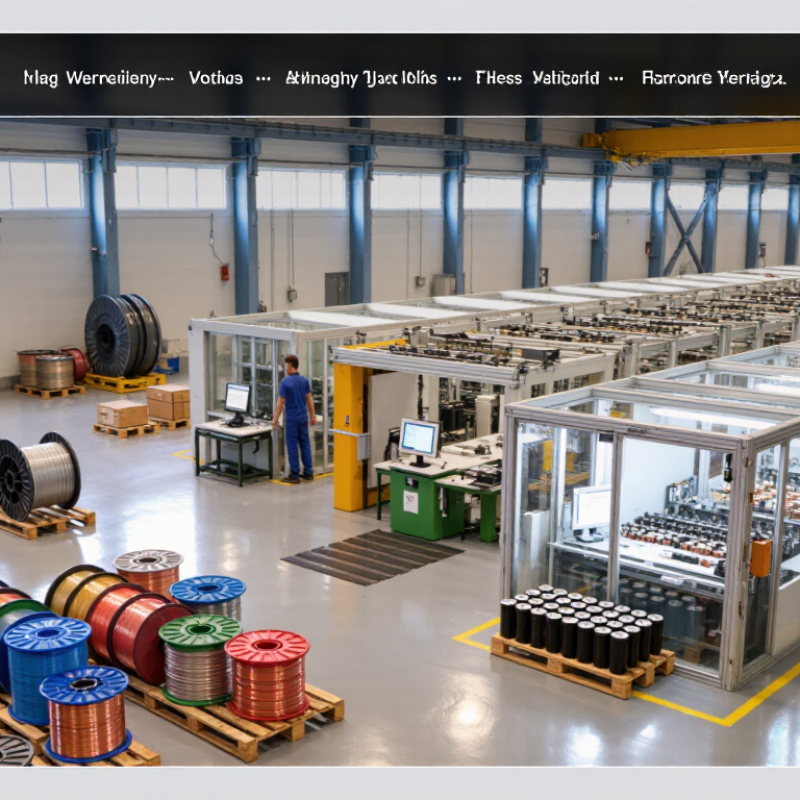
China’s wire and cable manufacturers produce many cable types for construction, industry, transport, energy, and communication projects. Building wires usually use copper or aluminum conductors with PVC or low-smoke insulation. They fit lighting circuits, distribution panels, and indoor equipment. Flexible cords are softer and suit appliances, tools, and moving machinery.
Power cables handle higher loads and often include XLPE insulation, steel armor, or moisture-resistant jackets. Control cables carry signals between sensors, motors, and automation cabinets. Their numbered cores make installation easier. Instrumentation cables can include shielding to reduce electrical interference. Coaxial cables support video and radio signals, while fiber optic cables transmit data through glass or plastic fibers.
Details matter more than appearance. A supplier should provide conductor size, voltage rating, temperature range, insulation material, and test records. In factory inspections, checking drum labels against the order can prevent costly mistakes. Samples should also be measured, bent, and inspected for jacket cracks. Small defects matter.
Chinese factories can produce custom colors, lengths, core counts, and packaging. However, product descriptions are sometimes too broad. A cable called “industrial” may not suit outdoor sunlight, constant movement, or chemical exposure. Buyers should match the cable to its real environment and request standards documentation before approval. Availability is useful, but traceable quality is more important.
Key Criteria for Evaluating Chinese Cable Manufacturers
Choosing among China’s wire cable manufacturers and suppliers requires more than comparing quoted prices. Start with technical fit. Check conductor material, insulation type, voltage rating, temperature range, bending radius, and intended installation environment. A capable supplier should explain these details clearly, not simply copy specifications from your inquiry.
Ask for recent test reports, production samples, and quality-control records. Verify whether the reports match the exact cable construction you will receive. Factory experience matters here. Inspect extrusion lines, conductor stranding equipment, testing instruments, and storage conditions when possible. Look for batch numbers, raw-material records, and a traceable inspection process. Small details often reveal serious weaknesses.
Communication is another practical test. Can the supplier answer engineering questions without repeated delays? Can it describe tolerances, packaging, delivery risks, and corrective procedures? Request a sample before placing a large order. Test its dimensions, flexibility, markings, and electrical performance independently. Certifications are useful, but certificates alone do not prove consistent production. No checklist is flawless. I have seen polished documents hide weak follow-up and uneven samples. A reliable evaluation should compare documents, factory evidence, physical testing, and actual communication over time. This approach helps identify suppliers that can support stable quality rather than only offer an attractive first quotation.
China Best Wire Cable Manufacturers and Suppliers? - Key Criteria for Evaluating Chinese Cable Manufacturers
| No. | Evaluation Dimension | Key Technical or Commercial Requirement | Evidence to Request | Suggested Weight | Score (1–5) |
|---|---|---|---|---|---|
| 1 | Product Standards Compliance | The cable design should match the applicable IEC, national, or project specification. Common references include IEC 60228 for conductor classes and IEC 60502-1 for certain power cables rated up to and including 1 kV and 3 kV. | Product datasheets, construction drawings, applicable standard editions, type-test reports, and a written compliance matrix. | 15% | — |
| 2 | Conductor Quality | Conductor material, cross-sectional area, class, resistance, flexibility, and stranding must meet the declared design. IEC 60228 specifies conductor resistance requirements for commonly used cable conductors. | Raw-material certificates, conductor resistance results at the specified temperature, dimensional reports, and sample cross-section inspection. | 12% | — |
| 3 | Insulation and Sheath Performance | Insulation and sheath materials should suit the operating temperature, voltage, moisture, oil, UV, flame, abrasion, and chemical conditions of the installation. | Material type and grade, compound test results, thickness measurements, aging tests, elongation and tensile-strength data, and environmental-resistance reports. | 12% | — |
| 4 | Testing and Quality Control | A reliable supplier should operate documented incoming-material, in-process, and final-inspection controls. Routine tests should be completed before shipment. | Quality-control plan, calibration records, routine-test reports, nonconformance procedure, batch traceability records, and independent inspection arrangements. | 15% | — |
| 5 | Management-System Certification | An independently certified quality-management system, such as ISO 9001, can demonstrate documented control of processes. Certification should cover the relevant manufacturing site and product scope. | Valid certificate, certification scope, issuing body, expiration date, audit status, and manufacturing-site address. | 8% | — |
| 6 | Required Market Certifications | Certification depends on the destination market, cable type, voltage level, and installation sector. Products sold in regulated markets may require national marks, third-party approvals, or project-specific certification. | Current certificates for the exact product and voltage rating, test reports from recognized laboratories, declarations of conformity, and destination-country compliance documents. | 10% | — |
| 7 | Production Capacity and Equipment | The facility should have suitable drawing, stranding, insulation, sheathing, armoring, testing, and packaging equipment for the requested cable construction. | Equipment list, production-flow description, capacity by product type, maintenance records, factory-audit report, and evidence that subcontracting is controlled. | 8% | — |
| 8 | Customization and Engineering Support | The supplier should be able to review voltage, conductor size, shielding, armor, bend radius, installation conditions, drum length, marking, and packaging requirements. | Technical questionnaire, approved drawings, sample-development process, engineering response time, change-control procedure, and installation recommendations. | 8% | — |
| 9 | Delivery, Packaging, and Traceability | Cable drums, lengths, labels, shipping marks, moisture protection, and batch identification should prevent damage and support installation-site verification. | Packaging specification, drum drawings, sample labels, production-batch identification, packing list, inspection release, and shipment photographs. | 5% | — |
| 10 | Total Cost and Commercial Transparency | The lowest initial price is not necessarily the lowest total cost. Compare material assumptions, cable length tolerance, testing, packaging, freight terms, duties, warranty, and replacement obligations. | Itemized quotation, Incoterms, payment terms, validity period, warranty terms, price-adjustment mechanism, and a clear list of included tests and documents. | 7% | — |
| Total Suggested Evaluation Weight | 100% | — | |||
Leading Manufacturing Regions and Industry Capabilities
China’s wire and cable industry is concentrated in several capable manufacturing regions. Jiangsu and Zhejiang support large production clusters, with strong copper processing, insulation, and industrial cable expertise. Guangdong is known for flexible wires, electronics cables, and customized small-batch orders. Hebei and Shandong also contribute heavily to construction, power transmission, and steel-reinforced cable production.
Capabilities differ by region. Some factories operate continuous extrusion lines, online diameter monitoring, spark testing, and aging laboratories. Others specialize in low-voltage building wire, photovoltaic cable, control cable, or fire-resistant designs. Experienced suppliers can provide conductor stranding, compound selection, terminal assembly, and export packaging in one workflow. They should also explain conductor purity, insulation thickness, tensile strength, and testing frequency clearly.
Quality is not perfectly uniform. A low quotation may hide thinner insulation, unstable copper content, or weak batch control. Buyers should request recent test reports, production samples, factory audit records, and traceable material documents. Independent verification remains valuable. Even experienced purchasers can miss a problem when specifications are vague. Clear drawings, voltage ratings, temperature requirements, and installation conditions reduce that risk. In practical sourcing, the best manufacturing region depends on the cable’s application, required volume, delivery schedule, and evidence of consistent quality.
China’s wire and cable supply base is concentrated in several established manufacturing regions. The index counts documented capability areas commonly associated with each region, including power transmission, building wire, industrial cable, data and communication cable, automotive wiring, and specialty cable. It is a capability-coverage indicator rather than a market-share or company ranking.
How to Verify Supplier Quality, Certifications, and Compliance
When comparing China’s wire and cable manufacturers, verify evidence rather than accepting polished brochures. The ISO Survey 2022 recorded 1,265,216 valid ISO 9001 certificates across 170 countries and economies. Certification is common, but it does not guarantee cable performance. Check the certificate number, issuing body, expiry date, and exact manufacturing scope. Confirm the factory address independently. Paper is not proof.
Request recent test reports for conductor resistance, insulation thickness, tensile strength, flame performance, and voltage rating. Match every result with applicable standards, such as IEC 60228 or IEC 60502. Ask whether samples came from normal production, not a specially prepared batch. Trace the batch. Review copper purity records, extrusion logs, calibration certificates, and final inspection photos. The European Commission’s Safety Gate report recorded 3,412 alerts in 2023, showing why compliance checks cannot stop at documentation. For regulated markets, verify RoHS, REACH, fire classification, and local certification requirements through official databases or accredited laboratories. Some suppliers provide valid certificates with outdated product models. That detail is easy to miss. A factory audit should examine storage humidity, drum labeling, seal integrity, and corrective-action records. I would also order a small trial shipment and retest it independently, because supplier claims can be accurate yet incomplete.
Steps for Selecting and Purchasing from a Chinese Cable Supplier
Selecting a Chinese cable supplier starts with a clear technical brief. Define conductor material, voltage, insulation, temperature range, jacket, standards, lengths, and tolerances. Ask for datasheets, factory photos, production details, and recent test records. A polished website proves little. Request samples from the same production line used for bulk orders. Check conductor diameter with calibrated tools. Record insulation thickness and flexibility after bending. Small details matter.
Evaluate manufacturing capability, not only the quoted price. Confirm extrusion equipment, testing facilities, batch traceability, and quality personnel. Ask whether tests cover spark, flame, tensile strength, aging, and electrical resistance. Independent inspection can verify results before shipment. It costs more. It may prevent costly returns. Review export experience and response speed. Clear answers often reveal process maturity. Vague promises deserve a pause. I once treated a low price as evidence of efficiency. It later reflected omitted testing and packaging assumptions. That mistake is easy to repeat.
Before purchasing, compare the proforma invoice, payment terms, lead time, packaging, warranty, and defect handling. Put every specification into the purchase contract, including approved sample photos and test limits. Start with a controlled trial order when risk is high. Inspect cartons, labels, reel dimensions, and cable markings on arrival. Keep retained samples and inspection records. Communication can still fail across languages. Use drawings, numbered requirements, and written approval. The best supplier is not always the cheapest. It is the one whose process remains dependable when production gets busy.
Related Posts
-
China Top 10 Wire Cable Manufacturers for Global Buyers?
-

Unlocking Growth: Structured Wiring Trends and Insights for the 138th Canton Fair 2025 in China
-
How to Use Fiber Patch for Enhanced Connectivity and Performance?
-
2026 How to Choose the Best Cable Management Tools for Your Needs?
-
How to Choose the Best Fiber Optic Cable Connectors?
-
How to Choose the Best Ethernet Cable Tester for Your Needs?