How to Choose the Best Ethernet Cable Tester for Your Needs?
Choosing the right ethernet cable tester can be challenging. With many options available, how do you find the best one for your needs? An ethernet cable tester is essential for network installation and troubleshooting. It helps ensure your cables are functioning properly.
When selecting an ethernet cable tester, consider its features. Some testers are basic, while others offer advanced functions. You might want to check for ease of use and portability. If you often work in different locations, a compact model might suit you. Durability is another aspect to reflect on. A sturdy tester can withstand daily wear and tear.
Price can vary significantly among different models. You may want to invest in a higher-quality tester if you need to perform complex tasks. However, a simpler option can be adequate for casual use. Keep your specific needs in mind. Reflecting on your requirements can lead you to the right choice. Remember, the best tester isn’t always the most expensive one.
Understanding the Basics of Ethernet Cable Testing
When selecting an Ethernet cable tester, it's essential to grasp the fundamentals of Ethernet cable testing. Ethernet cables come in various categories, each supporting different speeds and bandwidths. A good tester evaluates whether the cable meets its specifications. It checks for continuity, shorts, and wiring issues. Knowing these basics helps in choosing the right tool for your needs.
Consider these tips: Look for a tester that checks for cable length. This feature can save time during installation and troubleshooting. Also, ensure the tester verifies the cable's category compatibility. Some testers are simple, while others offer advanced functions. Choose one that matches your skill level.
Don’t overlook the importance of identifying common cable faults, like split pairs. Miswired cables can hinder network performance, causing frustration. Users often miss these errors in basic tests. A quality tester can highlight these mistakes. This awareness is crucial for anyone dealing with network setups or maintenance. Being mindful of these aspects will elevate your testing process.
Types of Ethernet Cable Testers and Their Features
When selecting an Ethernet cable tester, understanding the types available is essential. Basic testers usually check for continuity. They confirm if cables are connected correctly. These testers are simple and affordable. However, they may not provide detailed diagnostics.
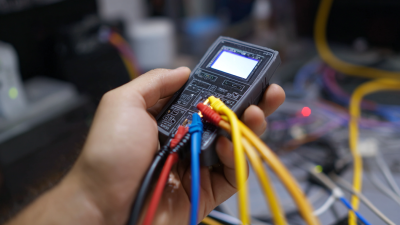
More advanced models include functionalities like wire mapping. They help identify miswiring issues in Ethernet cables. This feature saves time during installation. Some testers even detect cable length and signal quality. It's a more thorough analysis, but it can be a bit tricky for beginners to use.
On the market, you’ll find multifunction testers that measure cable performance, such as speed-testing capabilities. While they offer extensive features, setting them up may confuse some users. It's important to consider your specific needs. A complex tool might not be the best fit for a simple task. Simplicity often leads to more effective usage. Take your time evaluating options to find what genuinely meets your requirements.
Key Factors to Consider When Choosing a Tester
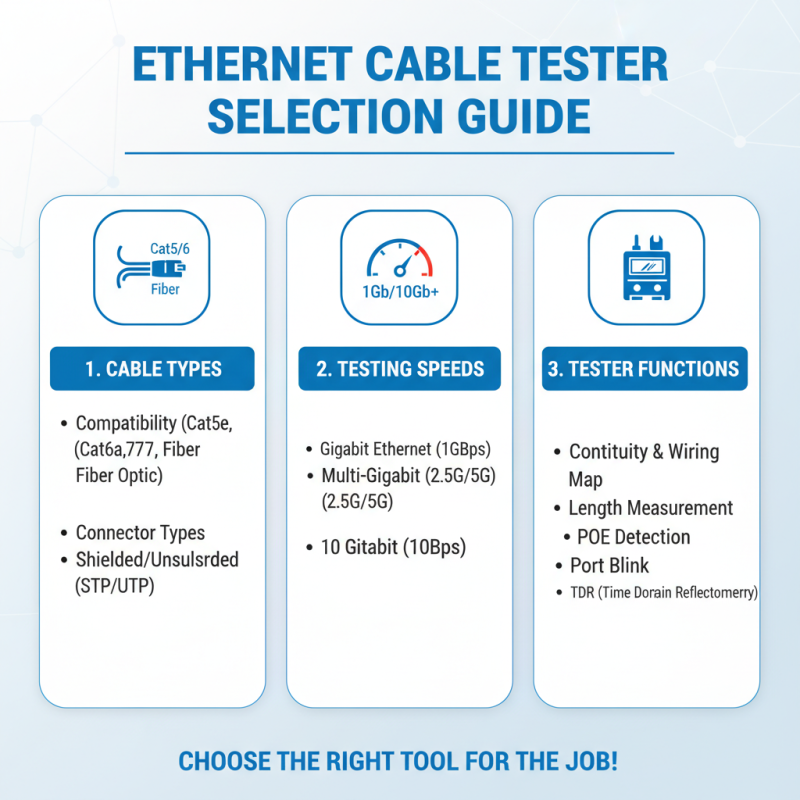
When selecting an Ethernet cable tester, several key factors come into play. The first factor is the type of cables you will be testing. Different testers suit various Ethernet standards, like Cat5, Cat6, or even fiber cables. It’s crucial to identify the compatibility of the tester with your cables before making a decision. Testing speeds, such as gigabit or faster, can also dictate your choice.
Another significant consideration is functionality. Some testers provide simple results, indicating connectivity issues or basic faults. Others offer more detailed diagnostics, including distance to faults and length measurement. Decide what level of detail you need. Simplicity works for quick checks, while complexity helps for in-depth professional evaluations.
Investing in features truly makes a difference. Look for additional functions, like PoE testing or remote testing functionality. Sometimes, cheaper models may lack vital features that could save you hours. Always balance your budget with your needs. This process is not foolproof. You might miss vital details in your selection, requiring you to rethink your priorities after initial use.
Comparing Costs vs. Features in Ethernet Testers
When selecting an Ethernet cable tester, understanding the balance between cost and features is crucial. According to industry reports, many testers range in price from $30 to $300. Budget models often lack advanced functionalities, offering basic connectivity tests. However, investing in a mid-range model can improve accuracy and provide additional features like cable length measurement.
Advanced testers include capabilities such as cable fault location and network performance analysis. One study revealed that 60% of professionals prioritize testing speed and accuracy over price. For example, high-end models can identify faults in less than five minutes. But, it's essential to assess if these features align with your specific needs. Sometimes, simpler tools may suffice for routine tasks.
Be cautious about overlooking user reviews and reports. Feedback can reveal nuances in performance and durability that specifications cannot. Even a seemingly minor feature could save time in troubleshooting. Features should align with actual usage scenarios. Remember that a competitive price doesn’t always guarantee reliability. Always weigh functionality against your real-world applications.
Ethernet Cable Tester Features vs. Costs
This chart compares the average cost of various Ethernet cable testers based on their features. The data reflects testers with different capabilities, such as cable length testing, wire mapping, PoE testing, and additional features.
Top Recommended Brands and Models of Ethernet Cable Testers
When selecting the right Ethernet cable tester, brands and models should be carefully considered. A recent industry report indicated that over 70% of professionals favor testers that offer advanced features like cable mapping and PoE testing. These functionalities ensure that your network infrastructure is properly assessed.
Reliable models often come equipped with an LCD screen for easy reading of test results. Some devices even provide an option to store test results for future reference. However, a significant number of users overlook this feature, which can be crucial for larger installations. Experts recommend testers that can detect various cable types, such as Cat5e, Cat6, and fiber optics.
Despite many choices in the market, not every tester performs well in all scenarios. Some users report issues with inconsistency in readings, especially in older cables. It is essential to consider the environment where you will be testing. High humidity or fluctuating temperatures can affect the accuracy of certain models. Making the right choice involves balancing between features and reliability.
How to Choose the Best Ethernet Cable Tester for Your Needs?
| Model |
Test Type |
Cable Types Supported |
Display Type |
Price Range |
| Basic Cable Tester |
Continuity |
Cat5e, Cat6 |
LED Indicators |
$15 - $30 |
| Advanced Network Tester |
Time-Domain Reflectometry |
Cat5e, Cat6, Cat6a |
LCD Display |
$200 - $300 |
| Professional Cable Analyzer |
Wiremap, Length, Signal Loss |
Cat5e, Cat6, Cat6a, Cat7 |
Color LCD |
$500 - $800 |
| Portable Tester |
Continuity, Multimeter Functions |
Cat5e, Cat6 |
Digital Display |
$50 - $100 |