How to Choose the Right Fiber Optic Cable for Your Internet Needs?
Choosing the right fiber optic cable is crucial for meeting your internet needs. The market for fiber optics is rapidly growing. According to a report by Research and Markets, the global fiber optic cable market is expected to reach $21.7 billion by 2026. This indicates an increasing demand for high-speed internet, essential for both businesses and households.
Expert Mark Johnson, a leader in the fiber optic industry, states, "The right fiber optic cable can drastically improve connectivity." It’s important to consider factors like cable type and length. Different environments may require distinct specifications. For example, outdoor cables are designed to withstand harsher conditions. This specificity can lead to confusion.
While some users may find the selection process straightforward, others may face challenges. Misunderstanding the requirements leads to improper choices. Ensuring compatibility is key for optimal performance. Keep in mind that not all cables are made equal. An informed decision will make a significant difference in your internet experience. Think critically about what you need before selecting your fiber optic cable.

Understanding Fiber Optic Cable Types and Their Applications
When choosing the right fiber optic cable, it helps to know the types available. There are mainly two types:
single-mode and multimode fibers.
Single-mode fibers transmit signals over longer distances with minimal signal loss.
They are ideal for long-haul telecommunications. However, they typically require more precise installation.
Multimode fibers, conversely, can handle shorter distances and are easier to install.
They transmit multiple signals simultaneously, making them suitable for local area networks.
In terms of applications, consider your specific needs. If your internet usage involves streaming high-definition videos or online gaming,
a single-mode fiber might be better.
On the other hand, cutting costs for simpler tasks, like browsing or emailing, a multimode cable suffices.
Performance can vary, and factors like bandwidth and environment affect results. You may find that not all installations go smoothly,
which can lead to frustration. Ultimately, understanding these cables helps you make informed choices for your internet needs.
Evaluating Speed and Bandwidth Requirements for Internet Use
Choosing the right fiber optic cable involves understanding your speed and bandwidth needs. Speed determines how fast data travels through the cable. Bandwidth relates to how much data can be sent at once. Both are crucial for a smooth internet experience. For example, streaming video requires more bandwidth than browsing social media.
If you're a heavy user, opt for cables with higher bandwidth capacity. High-definition streaming or online gaming demands more from your connection. Basic tasks, like checking emails, require less. It’s essential to assess your family’s usage patterns. Sometimes, you might underestimate your needs. Are there multiple users streaming simultaneously? Are there devices connected all at once? These factors add to your requirements.
Considering future needs is also vital. As technology evolves, your demands may increase. Investing in a cable that meets higher standards today may save you trouble later. While it might seem like a cost upfront, it can prevent frustration down the line. Think about it. Will one cable suffice for all your current and anticipated devices? Reflecting on these questions can help guide your choice effectively.
How to Choose the Right Fiber Optic Cable for Your Internet Needs?
| Cable Type |
Maximum Speed (Gbps) |
Bandwidth (GHz) |
Distance (m) |
Usage Scenario |
| Single-Mode Fiber |
100 |
50 |
5000 |
Long-Distance Communication |
| Multi-Mode Fiber |
10 |
2.5 |
300 |
Short Distance Connections |
| OM3 Multi-Mode |
40 |
10 |
300 |
High-Speed Data Centers |
| OM4 Multi-Mode |
100 |
10 |
400 |
Data Centers and Enterprise Networks |
Comparing Single-Mode and Multi-Mode Fiber Cables
When diving into the world of fiber optic cables, it's crucial to understand the differences between single-mode and multi-mode options. Single-mode fiber has a small core size, usually around 9 microns. This design allows light to travel longer distances with minimal signal loss. It's ideal for long-range communication. Multi-mode fiber, on the other hand, has a larger core, typically 50 or 62.5 microns. This structure supports multiple light paths but is better suited for shorter distances.
Consider your internet needs and environment carefully. If your setup requires spanning several kilometers, single-mode will likely serve you better. However, in small spaces, like offices or homes, multi-mode may meet your needs effectively. Think about the installation process as well. It’s crucial to note fiber optic cables can be delicate. Installation mishaps can lead to signal issues. Plus, the choice may also depend on the equipment you have. It often creates a confusing maze for those new to this tech.
For those aware of their requirements but still uncertain, consider consulting a professional. They can help decipher your needs. Yet, understanding these basic distinctions can empower you. It’s a journey to find the right fit for your connectivity demands.
Comparison of Single-Mode and Multi-Mode Fiber Optic Cables
The chart above compares key metrics of single-mode and multi-mode fiber optic cables, helping you to understand their differences in terms of bandwidth, distance capabilities, cost, and installation complexity.
Choosing Quality and Brand Reliability in Fiber Optic Cables
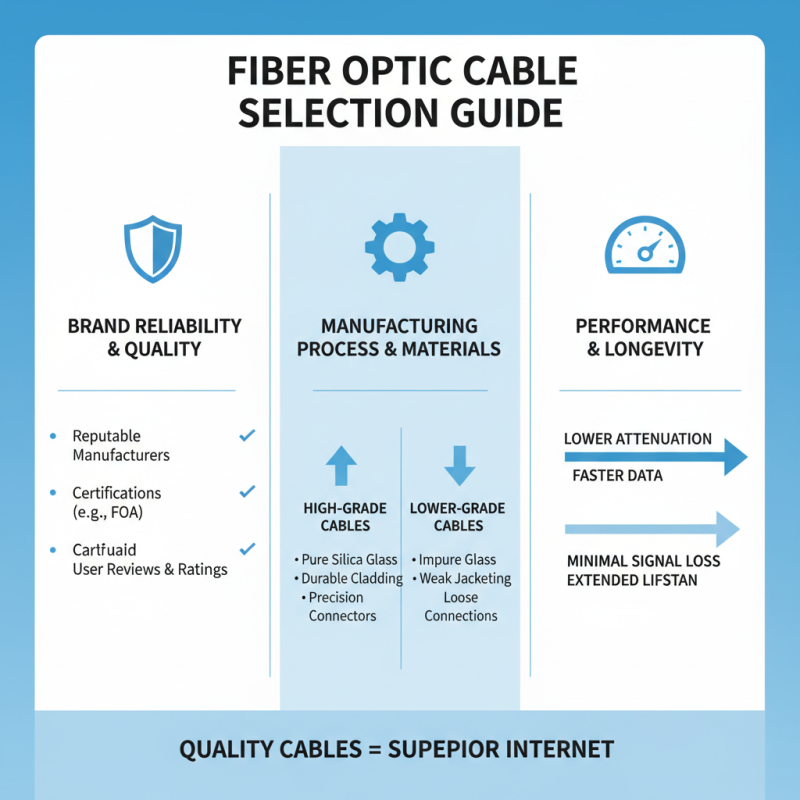
When selecting a fiber optic cable for internet needs, brand reliability and quality are key. Research indicates that the cable's manufacturing process can influence performance. Quality cables often feature better materials, ensuring longevity and speed. A report from the Fiber Optic Association states that high-grade cables provide lower attenuation levels. This means faster data transmission with minimal loss.
Look for cables that meet international standards. It’s important to consider certification from recognized organizations. For instance, cables compliant with IEC and TIA standards are often more reliable. But, many consumers overlook these details in pursuit of price. They end up with cables that fail under high demand. A significant number of users report issues with cheap alternatives. These can lead to frequent downtimes and slow speeds.
The choice of brand also plays a crucial role. Established brands tend to offer better customer service. They often provide warranties, which are essential for addressing potential issues. A 2022 market survey revealed that 70% of users prefer products from trusted brands. It’s clear that reliability shouldn’t be sacrificed for cost. However, many new buyers remain tempted by lower prices. This might lead to regret down the line.