How to Choose the Right Coax Adapters for Global Sourcing?
Global sourcing makes coax adapters look simple, but small specification errors can create expensive failures. A connector may fit physically and still perform poorly at high frequency. Impedance, interface type, plating, cable geometry, and environmental rating all matter. Choose carefully.
Industry reports show why this decision deserves technical attention. MarketsandMarkets identifies continuing growth in the global RF and microwave market, driven by wireless infrastructure, testing, aerospace, and industrial communication. Grand View Research also reports strong expansion in 5G infrastructure, where stable RF connections remain essential. These reports do not measure coax adapters alone, but they reveal rising demand for dependable signal paths. The World Bank’s Logistics Performance Index 2023 further highlights how shipment reliability and supply-chain visibility affect international purchasing decisions.
In practice, a sourcing team should verify every drawing, datasheet, and inspection record. I have seen adapters that matched an SMA label but failed because the cable used a different gender or interface standard. That mistake was avoidable. Always confirm 50-ohm or 75-ohm impedance, operating frequency, VSWR, insertion loss, contact material, and temperature range. Check whether the supplier provides dimensional tolerances and batch-level test results. Documentation matters.
The cheapest offer can become costly after rework, customs delays, or field failures. It is also worth reviewing RoHS, REACH, packaging, and destination-market requirements before placing an order. These checks support safer, compliant procurement. Still, no checklist is perfect. Supplier capability can change, and published values may not reflect real production. Independent sample testing remains valuable when selecting coax adapters for global sourcing.
What Coax Adapters Are and Where They Fit in RF Systems
How to Choose the Right Coax Adapters for Global Sourcing?
What Coax Adapters Are and Where They Fit in RF Systems
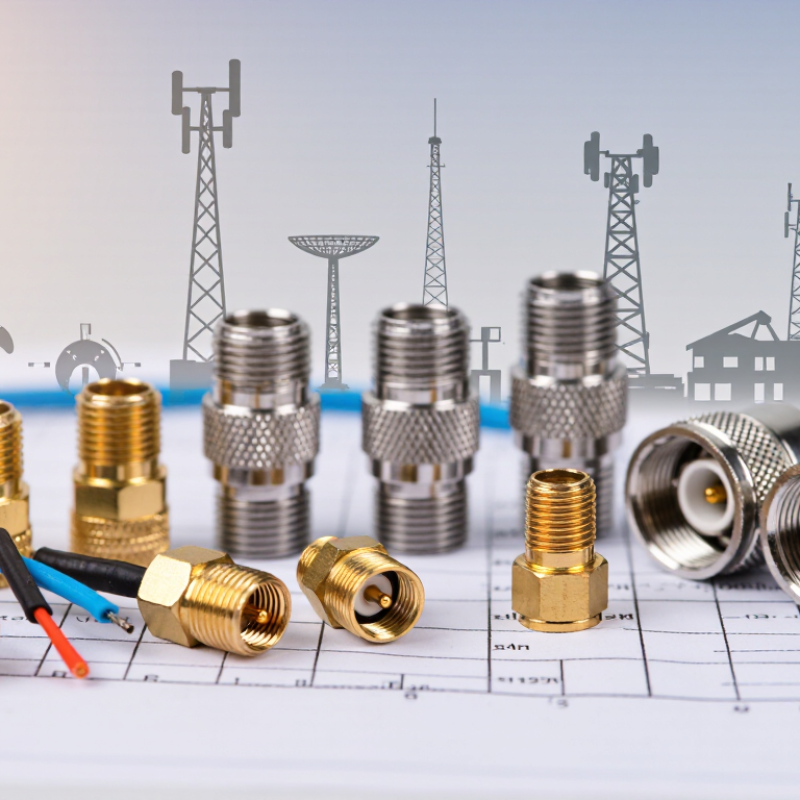
A coax adapter is a small RF component that joins cables, ports, or devices with different connector interfaces. It may convert a threaded connection to a bayonet style or change a plug into a socket. In an RF system, adapters often sit between antennas, radios, filters, amplifiers, and test instruments. Their size is modest, but their electrical effect can be significant.
Begin with the system requirements, not the connector’s appearance. Confirm impedance, operating frequency, connector gender, interface type, and allowable power. A 50-ohm adapter can be unsuitable in a 75-ohm video network. Check insertion loss and return loss at the highest working frequency. At microwave frequencies, poor machining or a loose center contact may increase reflection and weaken the signal. It happens more easily than many buyers expect.
Material details also matter during global sourcing. Examine contact plating, body finish, insulation material, and temperature ratings. Request dimensional drawings and inspection records before placing a large order. A practical incoming check includes thread fit, center-pin alignment, continuity, and visual inspection under magnification. If available, measure VSWR with a calibrated analyzer. Certification documents help, but they do not replace sample testing. I have seen specifications look complete while omitting connector tolerance. That gap deserves attention. Sometimes the cheapest adapter creates extra assembly work, and the real cost appears later.
How to Match Adapter Types, Connectors, and Transmission Standards
When sourcing coax adapters globally, match the transmission path before comparing price. In field purchasing, a visually identical adapter can create serious signal loss. Check impedance first: 50-ohm parts suit many radio-frequency systems, while 75-ohm parts commonly support video and broadcast links. Mixing them may increase reflections.
Connector geometry matters just as much. Compare SMA, N, BNC, TNC, and F interfaces by gender, coupling method, frequency range, and mounting style. Threaded connectors usually resist vibration better. Bayonet connectors save installation time. Confirm the interface drawing, not only the product photo. IEC 61169 standards help define connector dimensions and electrical performance. Yet, supplier drawings can still contain errors.
Transmission standards deserve equal attention. Review operating frequency, insertion loss, return loss, shielding, and voltage limits. ITU’s Facts and Figures 2023 reported 5.4 billion people online, representing 67% of the global population. That expanding connectivity increases pressure on reliable RF infrastructure. It also encourages rushed sourcing. Do not rely on catalog claims alone. Request test reports, calibration details, and samples from different production lots. A practical test with a vector network analyzer can expose poor matching. I have seen low-cost adapters pass a continuity check but fail at higher frequencies. That mistake is easy to repeat. Use the exact cable, connector, and transmission standard planned for production.
How to Evaluate Materials, Manufacturing Quality, and Compliance
How to Choose the Right Coax Adapters for Global Sourcing?
How to Evaluate Materials, Manufacturing Quality, and Compliance
A coax adapter may look simple, but its materials affect signal stability and service life. I examine the connector body, center contact, insulators, and plating before comparing prices. Brass offers practical strength, while copper alloys can improve conductivity. Gold or nickel plating may resist corrosion, depending on the environment. Avoid vague terms such as “premium metal.” Request material grades and plating thickness.
Manufacturing quality appears in small details. Threads should turn smoothly without looseness. Mating surfaces must be clean, concentric, and free from visible burrs. I also check return loss, impedance consistency, insertion loss, and cable retention through documented testing. Sample inspection is useful, but it is not enough. A small batch can hide process variation. Ask for inspection records, tolerance data, and corrective-action procedures. I once focused too heavily on appearance and overlooked inconsistent torque. That mistake changed my evaluation checklist.
Tips: Compare samples from different production lots. Check packaging before long-distance shipment. Confirm that drawings match the delivered adapter. Request test reports linked to batch numbers, not generic files. For compliance, verify applicable technical standards, restricted-material declarations, labeling, and traceability documents for the destination market. Requirements differ by region, and supplier statements may be incomplete. When evidence conflicts, pause the order and ask precise questions. Reliable sourcing depends on documented facts, not confident promises.
How to Choose the Right Coax Adapters for Global Sourcing?
Typical maximum operating frequency by coaxial connector interface. Actual performance depends on adapter design, cable assembly, impedance, and test conditions.
Materials
Check the body material, contact material, plating, and dielectric. Brass or stainless-steel bodies, plated contacts, and stable low-loss dielectric materials are commonly specified for RF adapters.
Manufacturing Quality
Request dimensional inspection, impedance verification, return-loss data, mating-cycle results, and sample-based RF test reports. Consistent machining and controlled plating thickness are key quality indicators.
Compliance
For global sourcing, confirm applicable IEC 61169 connector requirements and request documentation for RoHS and REACH substance compliance, supported by traceable material declarations.
Frequency figures shown are commonly published nominal limits for representative interface designs; the exact rating must be verified from the supplier’s datasheet and test report.
How to Compare Global Suppliers, Costs, Lead Times, and Logistics
Choosing coax adapters globally requires more than comparing unit prices. Confirm impedance, connector geometry, plating, shielding, return loss, and VSWR requirements. Request independent test reports and inspect samples from the actual production line. A supplier’s certificate alone is not enough.
The World Bank’s 2023 Logistics Performance Index evaluates customs, infrastructure, shipment pricing, logistics competence, tracking, and timeliness. Use these factors when comparing supplier countries. Then calculate landed cost, including tooling, minimum order quantities, inspection, packaging, freight, insurance, duties, and currency movement. Price is only one variable. UNCTAD’s Review of Maritime Transport 2023 states that over 80% of global merchandise trade by volume moves by sea. Sea freight may reduce cost, but it can extend delivery windows and increase inventory needs.
Request separate quotations for production time, sample time, transport time, and port handling. Confirm whether the quoted lead time starts after payment, drawing approval, or tooling release. Apply Incoterms 2020 carefully, because responsibility changes between shipping stages. For urgent, high-value adapters, air freight may protect schedules but damage margins. For routine replenishment, sea freight can work with a realistic buffer. A practical mistake is trusting one “best” supplier too early. I would compare at least three suppliers, audit their corrective-action records, and retest samples after any material change. Some sourcing decisions still rely on incomplete forecasts. That weakness deserves attention. Sources: World Bank, Logistics Performance Index 2023; UNCTAD, Review of Maritime Transport 2023; International Chamber of Commerce, Incoterms 2020.
How to Choose the Right Coax Adapters for Global Sourcing? - How to Compare Global Suppliers, Costs, Lead Times, and Logistics
Indicative sourcing benchmark for standard 50 Ω and 75 Ω coaxial adapters. Prices are typical small-to-medium volume ranges in USD and should be validated through RF testing, drawings, samples, and formal quotations.
| Supplier Profile |
Typical Supply Region |
Common Adapter Types |
Standard RF Capability |
Typical Unit Cost* |
Typical MOQ |
Sample Lead Time |
Production Lead Time |
Tooling / NRE |
Best Transport Option |
Best Fit |
| Supplier A |
East Asia |
SMA, SMB, SMC, BNC, TNC, N-Type |
DC–6 GHz common; higher frequency available by design |
$0.35–$3.50 |
100–500 pcs |
5–10 business days |
3–6 weeks |
$0–$1,500 for custom tooling |
Ocean for volume; air for urgent replenishment |
Lowest piece cost and broad catalog coverage |
| Supplier B |
South Asia |
SMA, BNC, N-Type, F-Type, UHF |
DC–3 GHz common; 75 Ω options widely available |
$0.45–$4.25 |
250–1,000 pcs |
7–14 business days |
4–8 weeks |
$0–$2,000 for custom tooling |
Ocean or consolidated air freight |
Cost-sensitive programs with moderate volumes |
| Supplier C |
Central Europe |
SMA, SMB, BNC, TNC, N-Type, 7/16 DIN |
DC–18 GHz standard; controlled RF performance |
$2.50–$18.00 |
25–100 pcs |
3–7 business days |
2–5 weeks |
Usually included for standard parts |
Road freight within nearby markets; air for export |
High-frequency, low-volume, and rapid-turn projects |
| Supplier D |
North America |
SMA, BNC, TNC, N-Type, F-Type |
DC–12 GHz common; 50 Ω and 75 Ω configurations |
$1.75–$12.00 |
50–250 pcs |
2–5 business days |
2–4 weeks for standard items |
$500–$2,500 for custom designs |
Domestic ground freight; air for international orders |
Short supply chains and North American delivery |
| Supplier E |
Mexico and Latin America |
SMA, BNC, F-Type, N-Type, RF cable assemblies |
DC–6 GHz common; assembly and integration support |
$0.90–$7.50 |
100–500 pcs |
5–10 business days |
3–6 weeks |
$250–$1,500 for custom fixtures |
Road freight to regional markets; air for urgent orders |
Nearshore supply and cable-assembly programs |
Technical and Commercial Evaluation Checklist
| Evaluation Dimension |
What to Confirm |
Typical Acceptance Point |
Sourcing Impact |
| Impedance |
50 Ω or 75 Ω design, including connector mating compatibility |
Must match the cable, equipment, and RF system |
Prevents mismatch loss and signal reflections |
| Frequency Range |
Operating band and maximum rated frequency |
Rated frequency should exceed the application band |
Higher-frequency designs usually cost more |
| VSWR / Return Loss |
Test method, frequency points, and limit values |
Request a test report for the actual part number |
Separates catalog-grade parts from RF-critical parts |
| Material and Plating |
Brass, stainless steel, contact material, and plating thickness |
Confirm corrosion resistance and mating-cycle requirements |
Affects durability, conductivity, and total cost |
| Environmental Rating |
Temperature, humidity, ingress protection, and outdoor exposure |
Use sealed designs where moisture or dust is expected |
May require gaskets, seals, or additional testing |
| Logistics and Landed Cost |
Unit price, freight, insurance, duties, taxes, and handling fees |
Compare delivered cost, not only ex-works price |
A lower unit price may have a higher total cost |
*Cost ranges vary with connector gender, right-angle or straight configuration, frequency rating, plating, packaging, order quantity, inspection requirements, Incoterms, and destination. Always approve a drawing, mating sample, dimensional inspection, and RF test result before production release.