How to Choose the Right RJ45 Jacks for Your Networking Needs
In today’s fast-paced digital world, the importance of selecting the right RJ45 jacks for your networking needs cannot be overstated. As technology continues to evolve, ensuring that you have the appropriate components for your network setup can greatly affect performance and reliability. Industry expert, John Smith, a renowned network infrastructure specialist, emphasized, "Choosing the right RJ45 jacks is crucial to achieving optimal network efficiency and speed." His insights remind us that not all jacks are created equal, and the nuances in specifications can have a significant impact on connectivity.
When navigating the vast market of networking hardware, understanding the specific requirements for your network environment is essential. Factors such as data transfer rates, cable compatibility, and the physical environment play a vital role in the effectiveness of RJ45 jacks. This guide aims to demystify the selection process and highlight the top 10 RJ45 jacks available, providing an informed approach tailored to diverse networking needs. By considering the advice of experts and assessing the characteristics of various options, you can ensure that your network remains swift, stable, and secure.
Understanding RJ45 Jacks: Types and Specifications
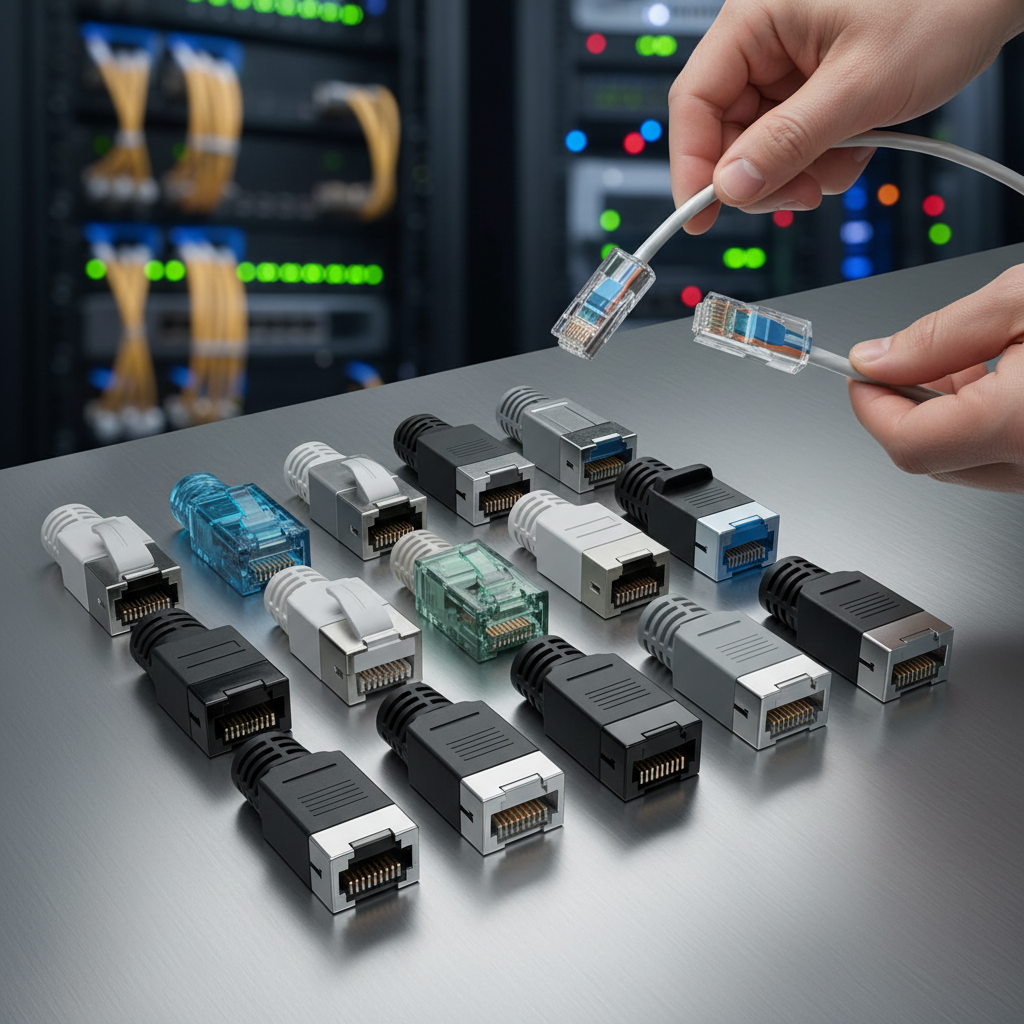
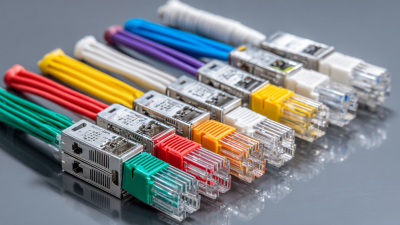
When selecting RJ45 jacks for your networking needs, it's important to understand the various types and specifications available. RJ45 jacks are primarily categorized into two types: unshielded twisted pair (UTP) and shielded twisted pair (STP). UTP jacks are widely used for standard Ethernet connections, whereas STP jacks are ideal for environments with high electromagnetic interference. Additionally, pay attention to the category rating of the jacks—Cat5e, Cat6, and Cat6a, as these directly affect your network's performance and speed.
Tips for choosing the right RJ45 jacks include assessing your network's speed requirements and the distance between devices. If you're planning to run a network capable of gigabit speeds, opting for Cat6 or higher is advisable. Also, consider the environment where the jacks will be installed. For outdoor or industrial applications, look for jacks with weatherproof and dustproof features to ensure longevity.
Lastly, don't overlook compatibility with your existing hardware. Ensure that the RJ45 jacks work seamlessly with your current cabling and devices. This will help maintain optimal network performance and reduce potential connectivity issues.
Comparison of RJ45 Jack Types
This chart compares different RJ45 jack types based on their data transmission speeds in gigabits per second (Gbps). Understanding these specifications helps in making informed decisions for your networking needs.
Key Factors to Consider When Selecting RJ45 Jacks
When selecting the right RJ45 jacks for your networking needs, several key factors must be considered to ensure optimal performance. Firstly, it's essential to look at the category rating of the RJ45 jack, which indicates its capability regarding data transmission speeds and bandwidth. Common options include Cat5e, Cat6, and Cat6a, with each higher category supporting faster speeds and greater frequency range. For modern networks, especially those involved in high-definition streaming or heavy data transfer, a Cat6 or higher may be the best choice.
Another important aspect to consider is the environmental conditions where the jacks will be installed. If the jacks are to be used in outdoor or industrial settings, choosing weatherproof or ruggedized models is crucial. Additionally, ensure compatibility with your existing network infrastructure, including cables and switches, to prevent any connection issues that could arise from mismatched standards. Finally, consider the ease of installation and maintenance, as user-friendly designs can significantly improve the efficiency of network setup and troubleshooting.
Comparing Performance: Speed Ratings and Standards
When selecting the appropriate RJ45 jacks for networking applications, understanding speed ratings and standards is crucial. RJ45 jacks primarily comply with standards set forth by the Institute of Electrical and Electronics Engineers (IEEE) and the Telecommunications Industry Association (TIA). Notably, the most common standards include T568A and T568B, which dictate wiring configurations that impact performance. According to a report by the Ethernet Alliance, RJ45 jacks rated for Category 5e can support speeds of up to 1 Gbps over distances up to 100 meters, while Category 6 can support up to 10 Gbps for the same distance—making the choice of category significant for future-proofing networks.
Performance metrics also hinge on the quality of materials used in the jacks. For instance, a study published by the Networking Equipment Manufacturer's Association emphasizes the importance of copper vs. aluminum conductors; copper jacks deliver superior performance with reduced attenuation and crosstalk. Furthermore, factors such as shielding in the design—whether unshielded twisted pair (UTP) or shielded twisted pair (STP)—also influence the jack's capability to maintain signal integrity in environments susceptible to electromagnetic interference. By evaluating these standards and performance ratings, network professionals can make informed choices that align with their specific requirements.
How to Choose the Right RJ45 Jacks for Your Networking Needs
| Category |
Speed Rating |
Standard |
Bandwidth |
Use Case |
| RJ45 Cat 5e |
1 Gbps |
IEEE 802.3 |
100 MHz |
Home Office, Small Networks |
| RJ45 Cat 6 |
10 Gbps |
IEEE 802.3an |
250 MHz |
Gaming, Video Streaming |
| RJ45 Cat 6a |
10 Gbps |
IEEE 802.3an |
500 MHz |
Data Centers, High-Speed Applications |
| RJ45 Cat 7 |
10 Gbps |
IEEE 802.3 |
600 MHz |
Professional Installations, Backbone Networks |
| RJ45 Cat 8 |
25-40 Gbps |
IEEE 802.3bz |
2000 MHz |
Data Centers, High-Performance Applications |
Assessing Environmental Factors and Durability
When selecting RJ45 jacks for your networking needs, it's essential to assess environmental factors that may influence performance and durability. RJ45 jacks are often exposed to varying temperatures, humidity levels, and dust, all of which can affect their longevity. According to a report by the International Electrotechnical Commission (IEC), jacks operating in extreme conditions can experience failure rates up to 20% higher than those used in controlled environments. Therefore, understanding the specific conditions in which the jacks will be deployed is crucial to making an informed decision.
Durability is another key consideration when choosing RJ45 jacks. Data from the Telecommunications Industry Association (TIA) indicates that jacks with a higher rating for insertion cycles can significantly enhance the reliability of network connections. For instance, jacks rated for 750 insertion cycles versus those rated for 250 can reduce the frequency of replacement and maintenance costs. Additionally, materials used in the construction of the jacks, such as gold-plated contacts, can improve resistance to corrosion, further extending the life span under challenging environmental conditions. Selecting jacks that are well-suited to the specific environmental demands will ensure a more reliable network infrastructure.
Cost vs. Quality: Finding the Right Balance for Your Network
When selecting RJ45 jacks for your networking infrastructure, striking a balance between cost and quality is crucial. According to a report by the International Telecommunication Union (ITU), subpar components can lead to a significant decrease in network performance, resulting in potential losses for businesses. In fact, studies have shown that low-quality jacks can increase error rates by up to 50%, causing disruptions that can affect overall productivity. Thus, investing in higher-quality jacks, even at a slightly increased cost, can be a prudent decision for long-term operational efficiency.
Moreover, the difference in pricing often reflects the manufacturing processes and materials used. For instance, a premium RJ45 jack may utilize gold-plated contacts and durable housing materials, which can enhance both reliability and data transmission speeds. According to a joint study by IEEE and the Consumer Electronics Association, networks utilizing high-quality components report an average increase of 25% in throughput. This statistic highlights that spending a little more upfront on quality RJ45 jacks can yield substantial benefits in network capabilities and performance reliability, ensuring that your networking needs are fully met without the threat of future upgrade costs due to early failures.