Why Are RJ45 Connectors Essential for Networking and Data Transmission?
In today's digital age, RJ45 connectors play a pivotal role in networking and data transmission. These connectors facilitate the seamless transfer of data between devices, ensuring that businesses maintain efficient communication. According to industry reports, the global market for networking cables, including RJ45 connectors, is anticipated to reach $23.4 billion by 2027. This growth reflects the increasing demand for reliable connectivity as more devices become interconnected.
The design of RJ45 connectors, which standardize Ethernet connections, allows for high-speed data transfer. With advancements in technology, these connectors support speeds of up to 10 Gbps, providing crucial bandwidth for applications that require instant communication. However, the rapid evolution of networking technology can pose challenges. Not all users fully understand the specifications that ensure optimal performance. Misunderstandings can lead to poor connections and inefficiencies.
While RJ45 connectors are essential, their effectiveness relies on proper installation and compatibility with existing systems. Awareness of these factors is necessary to fully leverage their capabilities. As industries adapt to new networking technologies, insight into RJ45 connectors’ significance is crucial for staying ahead in a competitive market.
Importance of RJ45 Connectors in Modern Networking
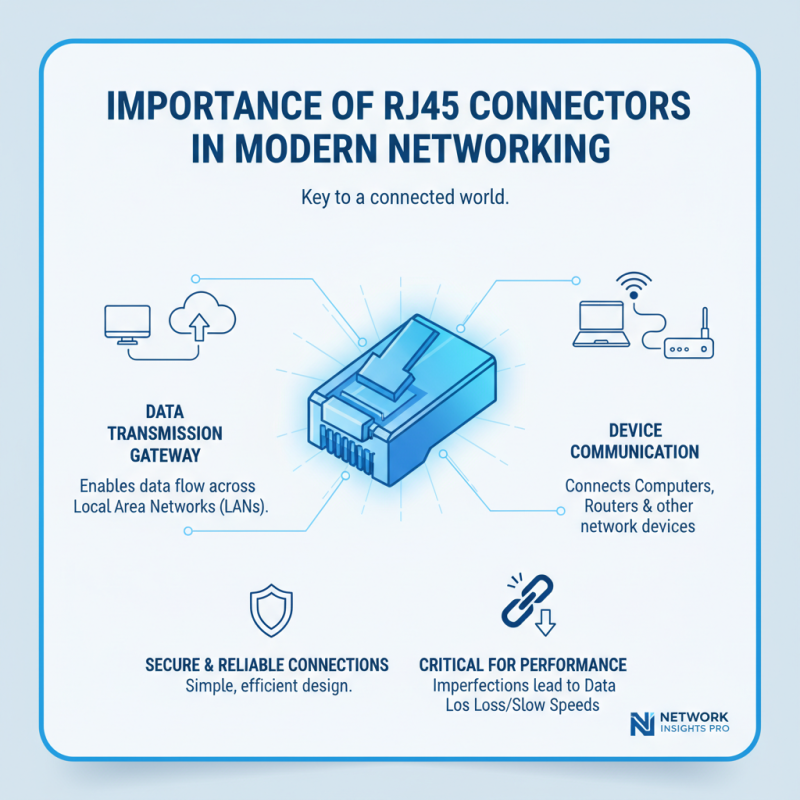
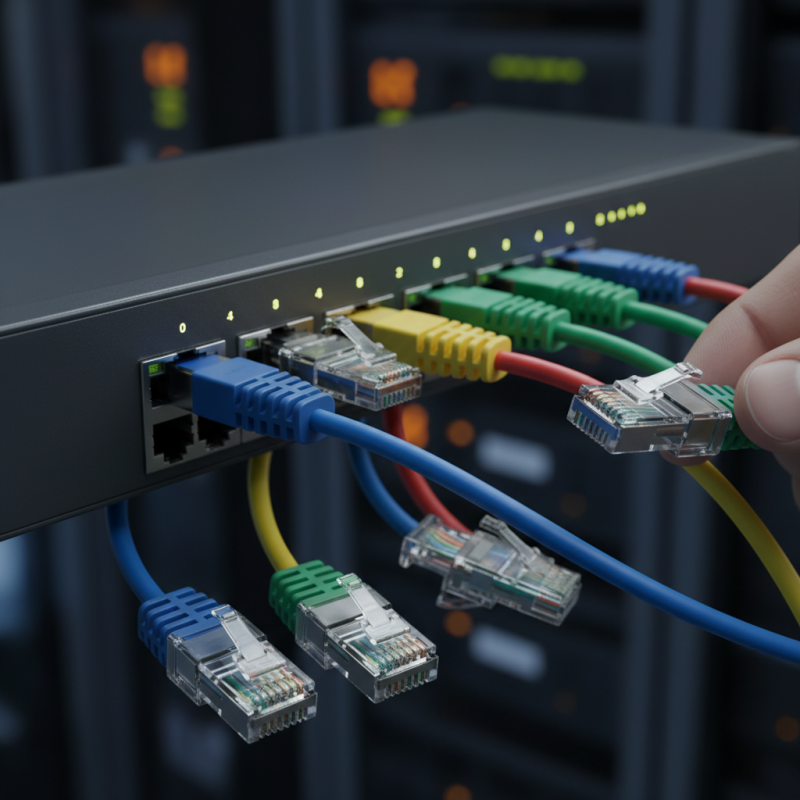
RJ45 connectors are vital for modern networking. They serve as the gateway for data transmission across local area networks. Without them, devices like computers and routers cannot communicate effectively. Their design is simple yet efficient, allowing for secure and reliable connections. In many cases, even a slight imperfection in these connectors can lead to data loss or slowed performance.
The importance of RJ45 connectors goes beyond just facilitating connections. They support high-speed data transfer, essential for streaming, gaming, and online communication. A faulty connector can disrupt service, leading to frustration. Many people overlook this small component until there’s a problem. A secure release during installation can prevent loose connections, but some users fail to ensure this.
These connectors also play a role in network scalability. Businesses often expand their infrastructure, needing robust connections. If RJ45 connectors aren’t maintained, they can become obsolete or cause bottlenecks. Users should regularly check their devices to ensure optimal performance. While they are just small pieces of hardware, their impact is significant. A little attention can prevent bigger issues down the road.
Overview of RJ45 Connector Structure and Types
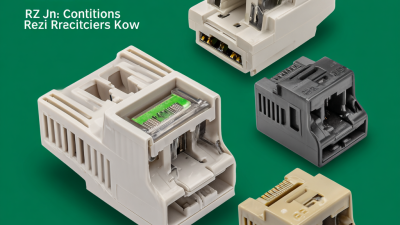
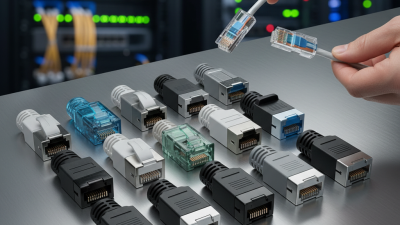
RJ45 connectors play a crucial role in modern networking. Their structure is simple yet effective. An RJ45 connector typically consists of eight pins, allowing for simultaneous data transmission. Among these connectors, variations exist: the standard RJ45, the shielded RJ45, and the crossover RJ45. Each serves different purposes, addressing specific networking requirements.
The standard RJ45 is widely used in Ethernet networks. It supports speeds up to 1 Gbps. The shielded version offers additional protection against electromagnetic interference. This makes it vital in environments with heavy machinery or other electronic devices. Crossover RJ45 connectors are less common today. They are used for connecting similar devices directly. While useful, their functionality has been largely overshadowed by advances in automatic switching technology.
Despite their reliability, RJ45 connectors are not infallible. Poor installation can lead to signal loss. A report by the Institute of Electrical and Electronics Engineers (IEEE) stated that improper wiring is a common error. About 30% of network issues stem from faulty connections. Proper understanding of RJ45 structures and their types is essential for optimal performance. Without this knowledge, networks risk inefficiency and downtime.
Key Functions of RJ45 Connectors in Data Transmission
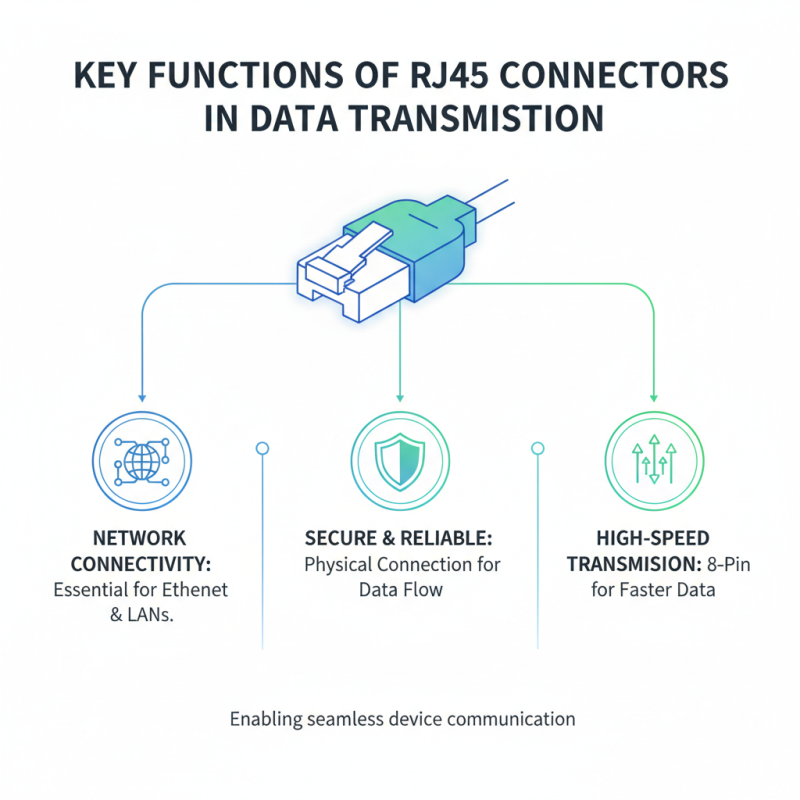
RJ45 connectors play a crucial role in networking. They are commonly used in Ethernet applications. These connectors enable devices to communicate effectively over local area networks (LAN). Their design supports a secure physical connection, ensuring reliable data transmission. The typical RJ45 connector has eight pins, each serving a specific function. This allows for faster speeds and more stable connections.
In data transmission, RJ45 connectors facilitate high-speed connections. They support various standards, allowing different devices to interact seamlessly. The eight wires inside an RJ45 can carry different signals simultaneously. This capability enhances data flow in busy environments. However, not all cables are created equal. Poor-quality cables can result in signal loss and reduced performance, which is sometimes overlooked.
Installation matters too. Proper wiring protocols must be followed for optimal performance. Even a minor mistake in connection can lead to failures. Testing the network regularly can help catch issues early. RJ45 connectors are essential, but their effectiveness depends on the whole system's integrity.
Comparative Analysis: RJ45 vs. Other Networking Connectors
When comparing RJ45 connectors to other networking options, a few key points emerge. RJ45 is the standard for Ethernet connections. It's widely used because of its reliability and speed. Other connectors, like Fiber Optic or coaxial, may offer benefits in specific scenarios. However, they can be more expensive and complex.
RJ45 connectors are designed for easy use. You can plug them in quickly, which is helpful in busy environments. That said, their simplicity can lead to errors. For example, a loose connection can result in network downtime. Always double-check your connections for the best performance.
Tip: Regularly inspect your RJ45 cables. Look for wear and tear that could affect data transmission. Replace any damaged cables immediately to maintain strong connectivity. Remember, a small oversight can lead to big problems. Keep your workspace organized to avoid cable clutter. This can help you spot issues more easily.
Best Practices for Using RJ45 Connectors in Network Setup
RJ45 connectors play a crucial role in networking and data transmission. They enable reliable connections for devices across various network types. To maximize their effectiveness, following best practices during installation is essential.
When setting up RJ45 connectors, ensure the cables are cut to appropriate lengths. Avoid excess slack, as tangled wires can cause interference. Strip only the necessary length of the cable insulation to prevent exposure of inner wires. According to a recent industry report, maintaining proper installation minimizes signal loss by up to 30%. Using high-quality connectors is also key. Low-cost options might lack the reliability needed for optimal performance.
**Tip:** Always use cable testers before finalizing connections. This ensures proper signaling and identifies any faults that could hinder data transmission.
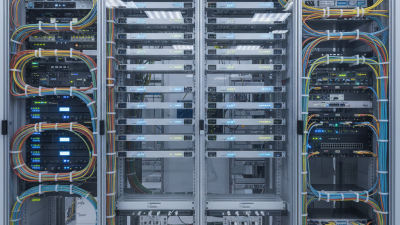
Another consideration is cable management. Organizing cables reduces clutter and tangling. Effective management can improve airflow around your equipment, preventing overheating. Studies indicate that proper cable management can extend the lifespan of networking hardware by up to 25%.
**Tip:** Label cables clearly. This simplifies troubleshooting and future upgrades. Having a structured approach saves time and effort down the line.
RJ45 Connectors Usage in Networking