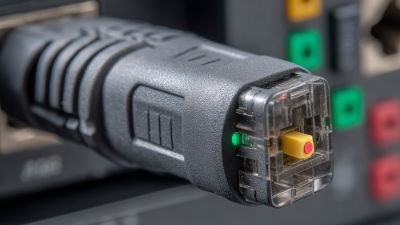
What is Fiber Network Cable and How Does It Work?
Fiber network cables are revolutionizing the way we communicate and share data. According to a report by Research and Markets, the global fiber optic cable market is expected to reach $6.39 billion by 2026, driven by the demand for high-speed internet and data transmission. Such growth highlights the importance of understanding fiber network cables and their functionality.
Dr. Emily Chang, an expert in optical communications, states, “Fiber network cables are crucial for the future of connectivity.” These cables use light to transmit data, which allows for faster and more reliable connections compared to traditional copper cables. As businesses and consumers increasingly rely on high-capacity networks, fiber network cables are becoming essential.
However, the transition to fiber technology is not without challenges. Installation can be costly and complex. Many businesses struggle with integration into existing infrastructure. This gap in understanding often leads to hesitation in adopting fiber solutions. As the industry evolves, addressing these issues is crucial for maximizing the benefits of fiber network cables.
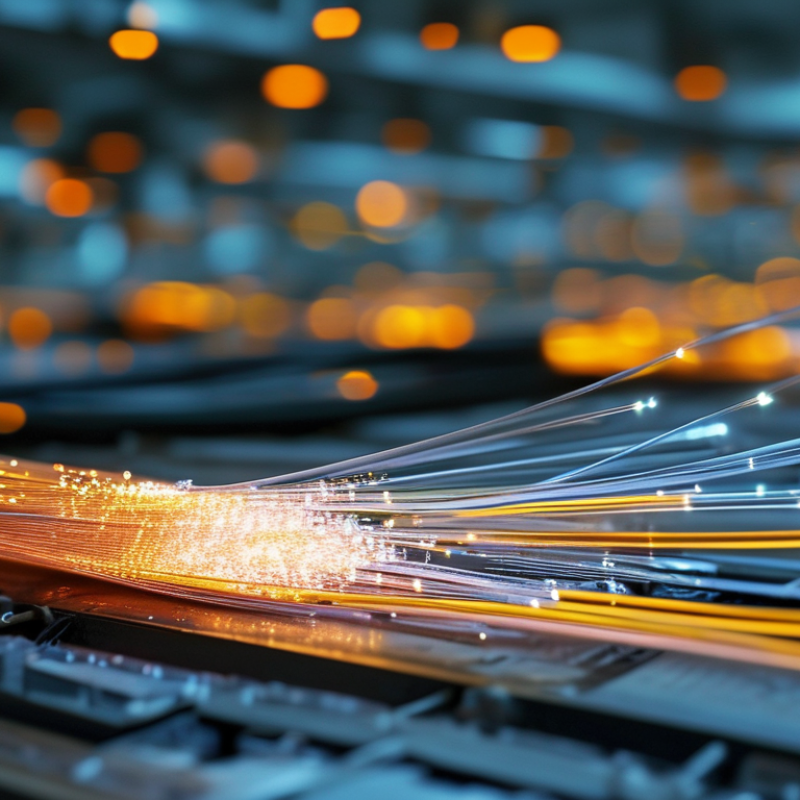
What is Fiber Network Cable?
Fiber network cable is a revolutionary technology in the world of data transmission. It primarily consists of thin strands of glass or plastic fiber that carry data as light signals. This allows for increased bandwidth and faster transmission speeds compared to traditional copper cables. According to industry reports, fiber optic cables can transmit data at speeds exceeding 100 Gbps, which is significantly faster than traditional cables.
The structure of fiber cables provides unique benefits. They are less susceptible to electromagnetic interference, which ensures stable communication. Additionally, fiber cables can transmit data over longer distances without signal loss. For instance, multimode fiber cables can operate up to 2 kilometers, while single-mode cables can reach distances over 40 kilometers. This distance advantage is critical for organizations that require reliable and high-speed connections across large areas.
Despite these advantages, fiber networks come with challenges. The installation process can be complex and expensive. Fiber cables require specialized tools and trained technicians for proper setup. Many organizations face difficulties when upgrading from copper to fiber, often facing infrastructure hurdles. This highlights the need for careful planning and consideration before implementing fiber network solutions.
The Components of Fiber Network Cables
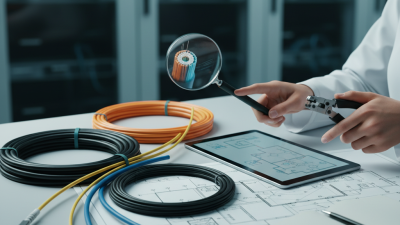
Fiber network cables are constructed using several key components. These include a core, cladding, buffer coating, and an outer jacket. The core is made of glass or plastic fibers that carry light signals over long distances. The cladding surrounds the core and reflects light back into it, ensuring minimal signal loss. This design allows for high-speed data transmission.
The buffer coating protects the delicate fibers inside. It adds strength and flexibility, while the outer jacket shields the cable from environmental factors. This is crucial for cables used outdoors. The combination of these components enhances the durability and efficiency of fiber networks.
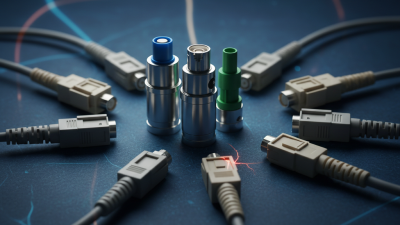
Various connection methods are employed to integrate fiber cables into network systems. However, installation can be challenging. Proper tools and techniques are essential for effective connections. Any mistakes can lead to performance issues. Understanding these components and their functions is vital for anyone working with fiber networks.
How Fiber Optic Technology Works
Fiber optic technology represents a significant advancement in data transmission. It utilizes light pulses to transmit information, allowing for faster speeds and higher bandwidth. The core of a fiber optic cable consists of glass or plastic fibers that carry data over long distances. According to a report by the International Telecommunication Union, fiber optics can transmit data at speeds exceeding 1 Gbps, dramatically outperforming traditional copper cables.
The process begins with a light source, typically a laser or LED, which sends signals through the fiber strands. These light signals reflect off the walls of the fiber at angles that keep them contained within. This phenomenon, known as total internal reflection, ensures minimal signal loss. Industry studies indicate that fiber optic networks can achieve transmission distances over 40 kilometers without significant degradation, making them ideal for both urban and rural connectivity.
Despite these advantages, fiber optic technology comes with its own challenges. Installation can be complex, requiring specialized skills and equipment. Additionally, the cost of deploying fiber networks remains a concern for many providers. According to a recent industry report, while fiber deployment costs have dropped, they can still exceed $30,000 per mile in certain areas. This leads to ongoing discussions about balancing performance with affordability in fiber network expansion.
Types of Fiber Network Cables and Their Uses
Fiber network cables come in various types, each designed for specific applications. Single-mode fiber cables are commonly used for long-distance communication. They have a small core, allowing only one light mode to pass. This results in minimal signal loss and makes them ideal for telecommunications. However, installation can be tricky and may require professional help.
Multi-mode fiber cables are another popular choice. They feature a larger core, accommodating multiple light modes simultaneously. This makes them suitable for shorter distances, like within buildings or campuses. The downside is that signal quality can degrade over longer distances. Both types offer remarkable speeds but may not be the best fit for every scenario.
Understanding these distinctions is crucial when selecting a fiber cable for your needs. Some users might find the technical specifications overwhelming. Choosing the right cable requires evaluation of your environment and objectives. Improper choices can lead to wasted resources and suboptimal performance. Taking the time to analyze each type will lead to better outcomes in network efficiency.
Types of Fiber Network Cables and Their Uses
Advantages of Fiber Network Cables Over Traditional Cables
Fiber network cables offer several advantages over traditional copper cables. One of the most significant benefits is their superior bandwidth capacity. According to a report by the Fiber Optic Association, fiber optic cables can support speeds exceeding 1 Gbps over long distances. In contrast, copper cables typically struggle to maintain such speeds beyond 100 meters.
In addition to speed, fiber cables exhibit lower attenuation levels, which means they experience less signal loss over distances. This trait enables long-distance communication without constant signal boosters. A study from the International Telecommunication Union highlights that fiber can transmit data up to 40 kilometers without significant signal degradation. This reliability is crucial for businesses that depend on uninterrupted internet connectivity.
Another compelling advantage is fiber's immunity to electromagnetic interference. Copper cables can be susceptible to interference from nearby electrical devices. In densely populated environments, this can create significant issues for data transmission. Fiber cables, on the other hand, maintain signal integrity, even in high-interference areas. This characteristic not only ensures reliable performance but also encourages fewer maintenance interventions. While fiber installation may initially seem costly, the long-term benefits often outweigh these upfront expenses.
What is Fiber Network Cable and How Does It Work? - Advantages of Fiber Network Cables Over Traditional Cables
| Feature |
Fiber Network Cables |
Traditional Cables |
| Transmission Speed |
Up to 100 Gbps |
Up to 1 Gbps |
| Distance |
Up to 40 km |
Typically up to 100 meters |
| Interference |
Resistant to electromagnetic interference |
Susceptible to electromagnetic interference |
| Material |
Glass or plastic fibers |
Copper wires |
| Bandwidth |
High bandwidth capability |
Limited bandwidth |
| Cost |
Higher initial cost but lower long-term costs |
Lower initial cost but higher long-term maintenance costs |