What are RJ45 Connectors and Their Uses in Networking?
RJ45 connectors play a crucial role in networking. They are essential components for Ethernet cables used in various devices. According to a recent market report by Grand View Research, the global Ethernet connector market is expected to reach $15 billion by 2025. This growth highlights the increasing reliance on robust networking solutions.
These connectors are primarily used to connect computers, routers, and switches in local area networks (LANs). An estimated 70% of network infrastructures utilize RJ45 connectors due to their reliability and effectiveness. However, improper use can lead to connectivity issues, which is often overlooked.
Moreover, the design and quality of RJ45 connectors can affect network performance. Poorly manufactured connectors may result in signal loss or reduced speed. Continuous advancements in technology make it essential for professionals to stay informed about new standards and best practices. Balancing cost and quality remains a challenge in selecting RJ45 connectors for different applications.
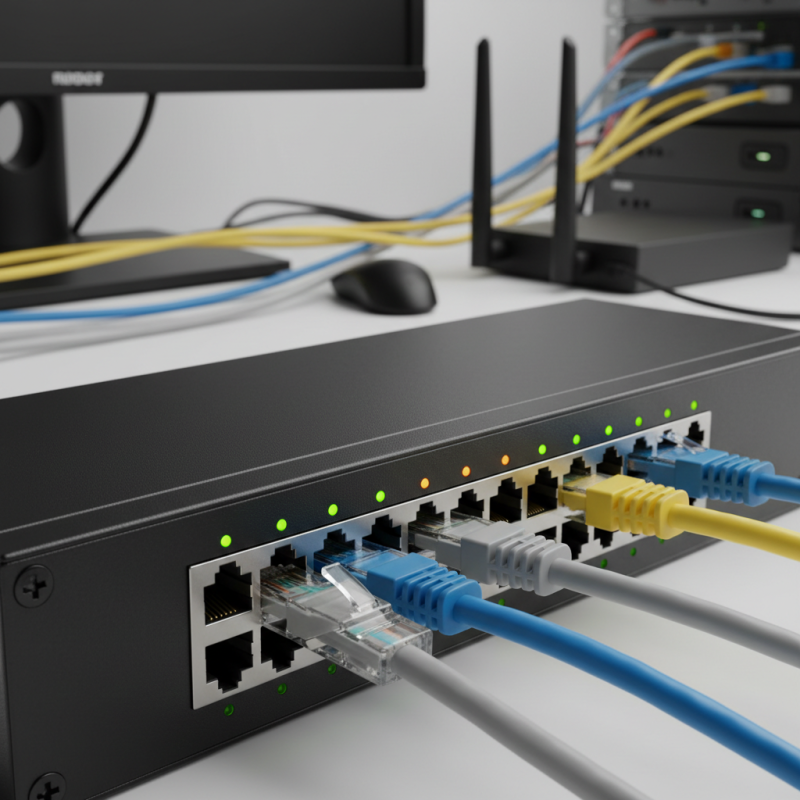
Understanding RJ45 Connectors: Definition and Structure
RJ45 connectors are essential components in modern networking. They facilitate communication between devices in local area networks (LANs). Understanding their structure helps grasp their function better. An RJ45 connector typically has eight pins. These pins are arranged in a specific order to ensure proper signal transmission.
The connector's body is often made of plastic. It has a clip that secures it in place, preventing accidental disconnections. When you plug it into a jack, ensure it clicks to confirm a secure fit. This simple mechanism is crucial for maintaining a stable connection.
**Tip:** Always check the pins for damage before use. Even slight bends can cause connectivity issues. Proper handling can extend the life of your connectors.
RJ45 connectors come in various categories. Each category supports different data transfer speeds and bandwidth. For example, Cat5e is suitable for lower speeds, while Cat6 supports higher performance. Choosing the wrong type can lead to slow network performance.
**Tip:** Label your cables to avoid confusion. This small step saves time during troubleshooting. It also helps keep your workspace organized.
What are RJ45 Connectors and Their Uses in Networking?
| Dimension |
Description |
| Connector Type |
RJ45 |
| Pin Count |
8 pins |
| Wiring Standard |
T568A and T568B |
| Maximum Data Rate |
1 Gbps (Gigabit Ethernet) |
| Usage |
Connecting computers to networks, switches, and routers |
| Cable Type |
Category 5e, Category 6, Category 6a |
| Form Factor |
Plug and Socket |
The Role of RJ45 Connectors in Ethernet Networking
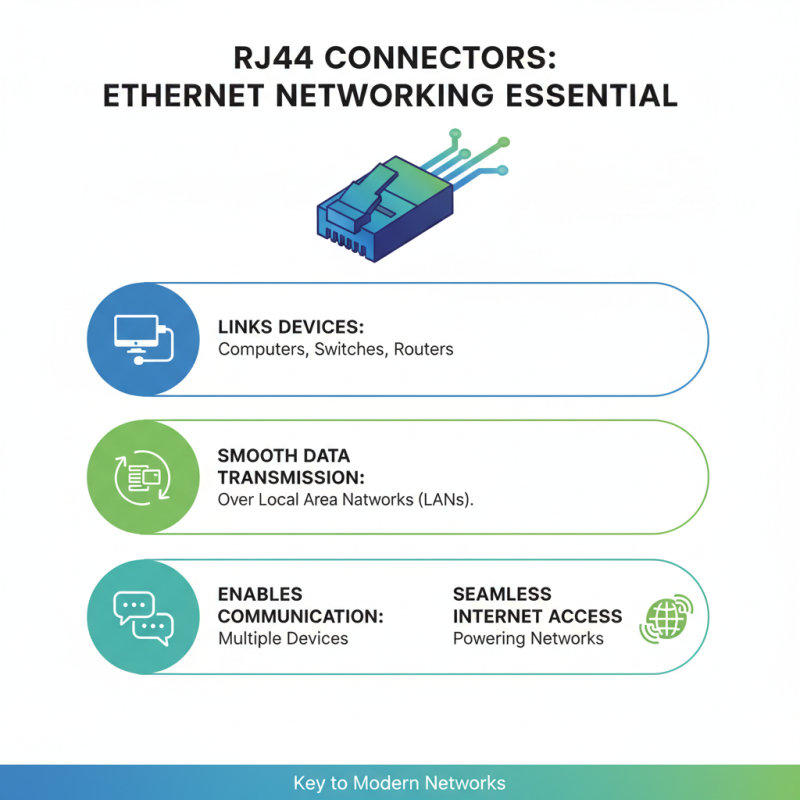
RJ45 connectors play a crucial role in Ethernet networking. These connectors are essential for linking devices like computers, switches, and routers. They ensure smooth data transmission over local area networks (LANs). By allowing multiple devices to communicate, RJ45 connectors enable seamless internet access.
When setting up a network, choosing the right cabling is vital. The quality of the cable directly affects performance. Poor connections can result in slow internet speeds and intermittent connectivity. Make sure to use high-quality cables to optimize your network.
Tip: Always check connections. Worn-out RJ45 connectors can lead to problems. Replace any damaged connectors promptly to maintain network stability.
Data transfer relies heavily on RJ45 connectors. Standard Ethernet networks use these connectors for speeds ranging from 10 Mbps to 1 Gbps. However, some setups may require even higher speeds. In these cases, proper installation and cable management become even more essential.
Tip: Label your cables. Identifying connections easily can save time during troubleshooting. Without labels, it is easy to mix up cables, leading to confusion. Take this small step for more organized wiring.
With the right understanding of RJ45 connectors, you can enhance your network’s efficiency. It’s worth taking the time to ensure each connection is secure and optimized. Small adjustments can yield significant benefits.
Types of RJ45 Connectors and Their Specific Applications
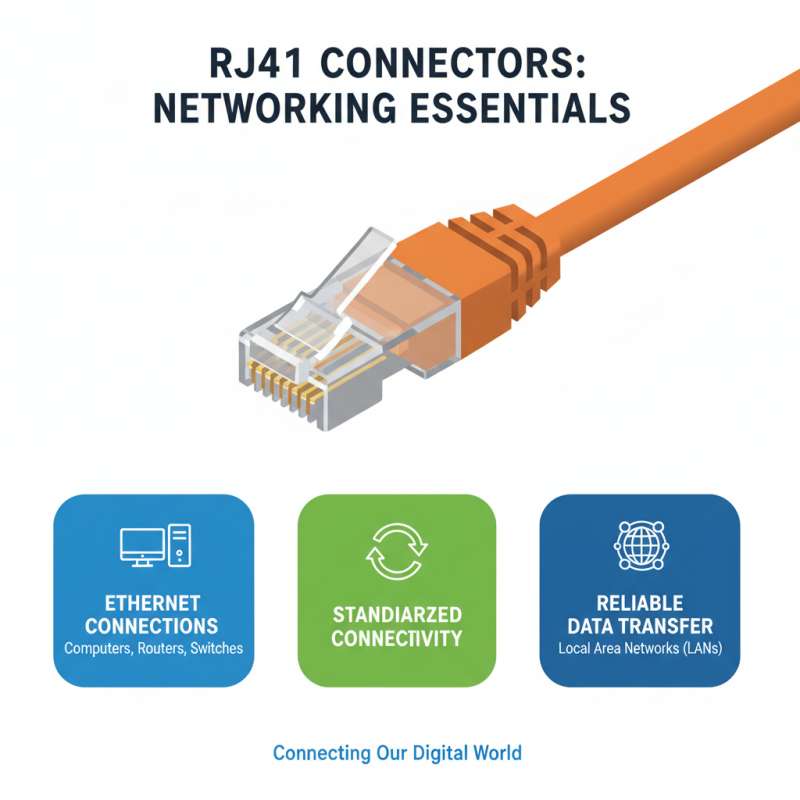
RJ45 connectors are essential in networking. They are widely used for Ethernet connections. These connectors offer a standardized way to connect computers, routers, and switches. They provide reliable data transfer in local area networks (LANs).
There are several types of RJ45 connectors. The most common type is the unshielded twisted pair (UTP) connector. It's widely used for general networking applications. Another type is the shielded twisted pair (STP) connector. This variant helps reduce electromagnetic interference. It is beneficial in environments with many devices.
Different applications require specific types. For home networks, UTP connectors are sufficient. In industrial settings, STP connectors are preferred. These choices can impact performance. However, not everyone understands these differences. Some may overlook the importance of shielding. Making the right choice is crucial. It can affect speed and reliability.
How to Properly Use and Install RJ45 Connectors
RJ45 connectors are vital in today’s networking. These connectors enable Ethernet connections for our devices. Proper installation is key to ensuring effective data transfer and network reliability. When using RJ45 connectors, it’s essential to follow industry standards. Studies show that improperly crimped connectors can lead to a 40% increase in data errors. Each connection needs precision.
To install RJ45 connectors correctly, start by stripping the cable. Remove about an inch of the outer jacket, exposing the twisted pairs. Keep pairs twisted as much as possible to maintain their performance. This helps avoid interference, an often overlooked factor. The untwisted length should not exceed half an inch.
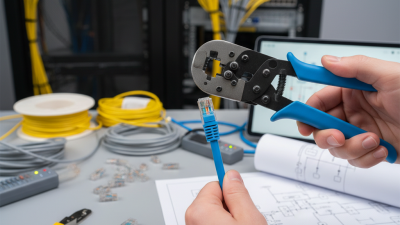
When inserting wires into the connector, pay attention to the color codes. Each pair has a specific order. Misplacement can cause network issues, even total failures. Lastly, make sure to use a proper crimping tool. A poor crimp can fail under stress, leading to downtime. Bad connections can cost businesses time and money. Regularly check and test connections. This ensures robustness and reliability in your network.
Common Issues and Troubleshooting with RJ45 Connectors
RJ45 connectors are essential components in networking, often used for Ethernet cables. However, they can present various issues. A study by the International Data Corporation highlights that nearly 30% of network failures are due to physical layer problems, including faulty RJ45 connections.
Common issues include loose connections, which can lead to intermittent connection drops. It's crucial to ensure that the connector is properly attached to the cable. If the wires inside the RJ45 are not correctly aligned, network performance can suffer drastically. Often, users overlook this detail. Another frequent problem is damage to the connector itself. Scratches or cracks can impact the connection quality and communication speed.
Troubleshooting involves checking these connections regularly. Reseating or replacing damaged connectors can often resolve problems rapidly. Additionally, using a cable tester can identify wiring faults before they escalate. Being proactive in maintaining RJ45 connectors can save significant downtime and frustration. Many network technicians recommend scheduling regular checks to prevent issues from becoming critical.
RJ45 Connector Common Issues and Troubleshooting