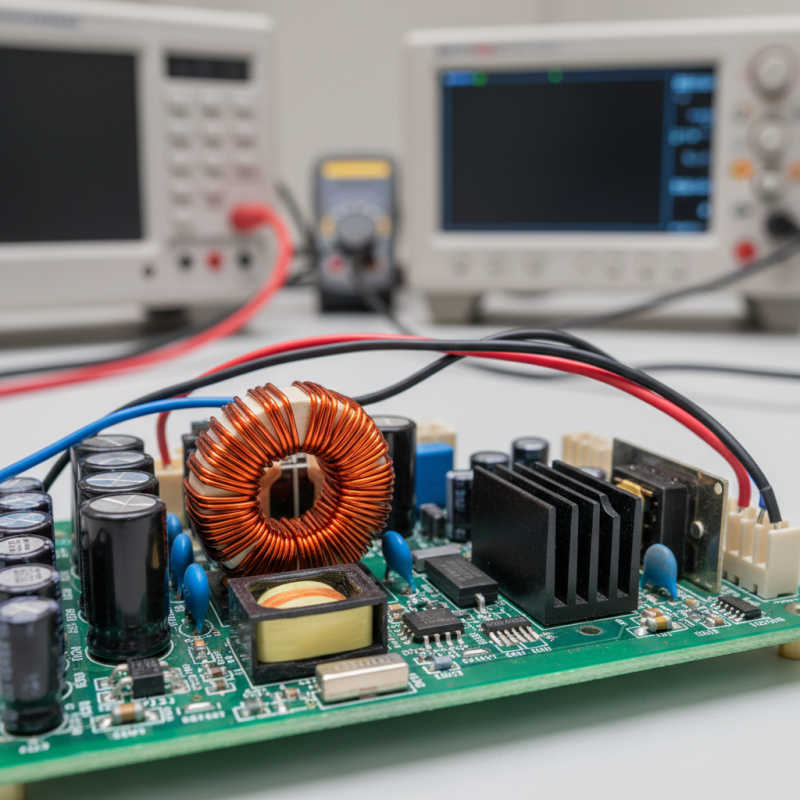
What is a Switching Power Supply and How Does It Work?
A Switching Power Supply is essential in modern electronics. It converts electrical power efficiently, making it a key component in various devices. These supplies use a technique called high-frequency switching to regulate voltages. This method enhances efficiency, reducing energy loss and heat dissipation.
The design of a Switching Power Supply can sometimes be complex. Engineers face challenges in balancing performance and cost. Compact designs may sacrifice heat management, leading to potential failures. Users often overlook these limitations, assuming all power supplies work flawlessly.
Understanding how a Switching Power Supply functions helps in appreciating its role. It transforms voltages for laptops, smartphones, and many appliances. Yet, this efficiency comes with nuances that require careful attention. Users must recognize the potential risks involved in relying on such technology without fully understanding it.
What is a Switching Power Supply?
A switching power supply (SPS) is an essential component in modern electronic devices. It converts electrical energy efficiently by switching transistors on and off rapidly. This method allows for reduced heat production and improved energy efficiency, which is crucial in today's compact devices. According to a report by the International Energy Agency (IEA), switching power supplies can achieve efficiencies of up to 95%. This is a significant improvement compared to linear power supplies.
The operation of a switching power supply is based on two main processes: voltage conversion and regulation. It employs high-frequency switching to maintain a steady output voltage. The size of transformers used in SPS designs is also smaller, making integration into compact devices easier. However, not all SPS designs are flawless. High-frequency switching can introduce electromagnetic interference (EMI), affecting the performance of nearby electronic components. Crafting an SPS involves balancing performance and noise reduction.
Industry research indicates that the market for switching power supplies is expected to grow significantly. A report by MarketsandMarkets forecasts a compound annual growth rate (CAGR) of 4.0% from 2020 to 2025. This growth signifies the increasing reliance on efficient power solutions in sectors like consumer electronics, telecommunications, and industrial applications. However, manufacturers must continuously address challenges in design and regulation compliance.
Key Components of a Switching Power Supply
A switching power supply is crucial in converting electrical power efficiently. Its design is centered around several key components. One primary part is the switch itself, often a transistor. This component alternates current flow, significantly improving efficiency. Reports indicate that switching power supplies can achieve efficiency rates over 90%. This contrasts sharply with linear power supplies, which often struggle to exceed 60%.
Another vital element is the transformer. It steps up or down voltage levels, allowing for intended output regulations. The use of high-frequency transformers helps reduce size and weight, making these power supplies more compact. According to industry studies, optimized designs can reduce physical dimensions by up to 50%. Yet, as with any technology, there are drawbacks. Managing electromagnetic interference (EMI) is often challenging, requiring additional filtering components.
Capacitators play a critical role in energy storage and smoothing output. High-quality capacitors improve performance but must be selected carefully. Poor choices can lead to shortened lifespans and performance issues. While the promise of lightweight and efficient power supplies is enticing, the complexities of component selection and design necessitate careful attention.
How Switching Power Supplies Convert Electrical Energy
Switching power supplies are crucial in modern electronics. They efficiently convert high-voltage electricity into lower voltages. This conversion happens through a series of components, including transformers and inductors. By rapidly switching the electrical current on and off, these power supplies regulate voltage effectively.
One common misconception is that all power supplies are the same. In reality, switching power supplies are more efficient. They waste less energy as heat than linear power supplies. However, this efficiency doesn’t come without challenges. Designers must manage electromagnetic interference and ensure reliability. The rapid switching can create noise that may affect sensitive electronics.
**Tip:** Always check the specifications of a switching power supply before use. Compatibility is key to performance.
Understanding the inner workings helps in troubleshooting. If a switching power supply is failing, it might be due to component aging. Sometimes, replacing a capacitor or inductor can solve significant issues. Regular maintenance can extend the lifespan of these devices.
**Tip:** Consider using load testers during maintenance. They can help identify problems early.
Advantages of Using Switching Power Supplies
Switching power supplies offer various advantages that make them highly preferred in today’s electronics. Their efficiency is a standout feature. Reports indicate that these supplies can achieve efficiencies of up to 95%, significantly reducing energy waste compared to linear power supplies. This efficiency leads to less heat generation, which results in a smaller need for bulky heat sinks and cooling systems. Consequently, this design allows for lighter and more compact devices.
Another benefit lies in their wide input voltage range. Many switching power supplies can handle input voltages from 85V to 265V, making them adaptable for global applications. This flexibility is essential for manufacturers aiming to sell products worldwide. Despite these advantages, there are some downsides. Many users have noted that switching power supplies can introduce electrical noise, which sometimes interferes with sensitive devices. Balancing efficiency and noise remains a challenge in product design.
Cost-effectiveness is another crucial aspect. The initial investment in switching power supplies may be higher, but the lifecycle savings often outweigh the upfront costs. Notable research shows that industries can save thousands annually in power consumption alone by utilizing these supplies. However, engineers must continually assess design trade-offs; despite the significant benefits, their complexity can lead to issues in reliability if not engineered properly.
Common Applications of Switching Power Supplies
Switching power supplies are widely used in various applications due to their efficiency and compact design. They are found in consumer electronics, such as laptops and mobile phones. These devices require a stable power source that can adjust to different voltage levels. The ability to switch between different states helps to keep devices running smoothly without overheating.
In telecommunications, switching power supplies play a crucial role. They provide the necessary power for routers and switches. This technology ensures that data can be transmitted at high speeds. Additionally, in industrial settings, these power supplies are used in automation systems. They give consistent voltage for machinery, which improves performance.
However, they are not without challenges. Noise and interference can affect performance. Designing them to minimize these issues remains a topic of ongoing research. The complexity of the design requires careful consideration of many factors. Balancing efficiency with size can be tricky. Each application has unique demands.
What is a Switching Power Supply and How Does It Work? - Common Applications of Switching Power Supplies
| Application | Input Voltage Range (V) | Output Voltage (V) | Power Output (W) | Efficiency (%) |
| Consumer Electronics | 100-240 | 5 | 50 | 85 |
| Industrial Equipment | 85-264 | 24 | 250 | 90 |
| Telecommunication | 48 | 12 | 1000 | 92 |
| Medical Devices | 100-240 | 15 | 300 | 88 |
| LED Lighting | 110-240 | 30 | 60 | 80 |