Platinum Tools®

We Make Connections EZ!

Top 10 Fiber Patch Cable Suppliers Worldwide

Choosing a reliable fiber patch cable supplier affects network stability, installation speed, and long-term maintenance costs. This guide reviews ten leading suppliers worldwide, focusing on practical evidence rather than marketing language. Their products serve data centers, telecommunications networks, security systems, and industrial environments. Each supplier is considered through manufacturing experience, technical expertise, quality controls, and customer support.

The comparison examines connector types, fiber modes, polishing methods, jacket materials, insertion loss, and return loss. It also considers compliance documentation, testing procedures, customization options, and delivery performance. A dependable supplier should provide clear specifications and traceable inspection records. Small details matter. A scratched connector endface can interrupt an otherwise carefully installed link. Packaging matters too, especially when cables travel long distances or arrive at busy project sites.

No supplier is perfect. Catalog information may not reveal every production weakness, and regional service quality can vary. Some companies offer broad product ranges but limited technical guidance. Others provide excellent engineering support while serving fewer markets. This article therefore treats the ranking as a practical starting point, not an absolute verdict. Buyers should confirm current certifications, sample quality, warranty terms, and compatibility before placing large orders. Real project conditions often expose differences that datasheets cannot show. A careful review remains necessary.
Top 10 Fiber Patch Cable Suppliers Worldwide

What Fiber Patch Cables Are and Why Global Suppliers Matter

Top 10 Fiber Patch Cable Suppliers Worldwide

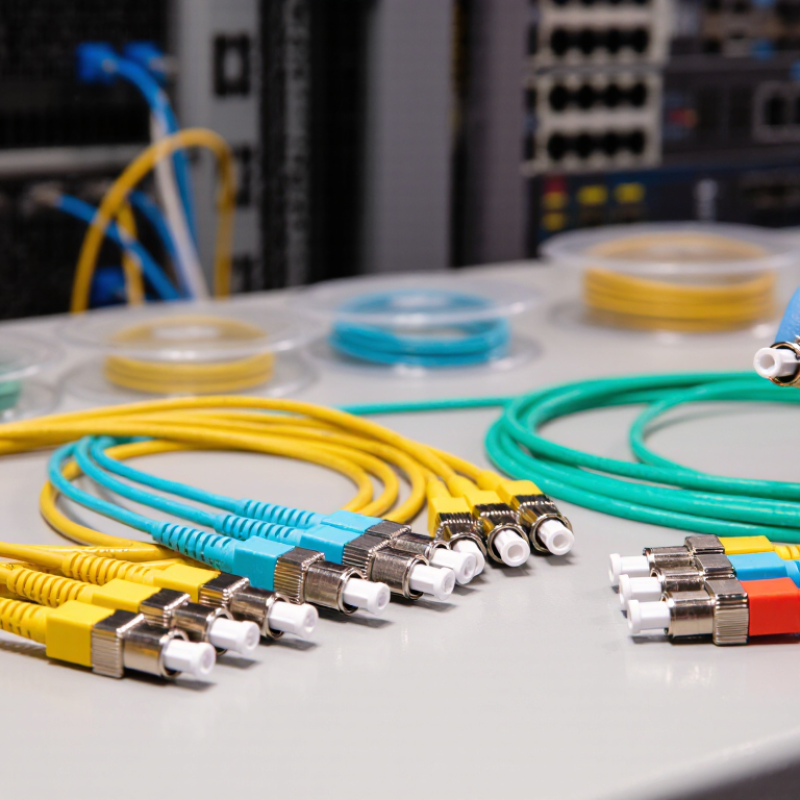
Fiber patch cables are short, pre-terminated fiber assemblies connecting switches, panels, transceivers, and test equipment. They carry optical signals through glass cores, not electrical current. Common choices include single-mode cables for long distances and multimode cables for shorter data-center links. Connector polish, polarity, insertion loss, return loss, and bend radius directly affect performance.

Small parts, large consequences.

Global suppliers matter because networks rarely stop at one city or one standard. The ITU Facts and Figures 2023 report estimated 5.4 billion people were online, representing about 67% of the global population. Meanwhile, OECD broadband data showed fiber accounted for roughly 42% of fixed broadband connections in member economies in 2023.

These figures indicate continuing pressure on reliable optical infrastructure.

Suppliers serving multiple regions can support consistent testing, documentation, packaging, and replacement availability. They also help integrators match cables with local network designs and installation practices.

A useful supplier evaluation should examine IEC-based test records, factory traceability, connector inspection, and delivery performance, not only unit price. It should also check whether cable geometry fits dense racks without sharp bends.

TeleGeography’s 2024 international bandwidth research documented continued growth in cross-border capacity, but demand forecasts are not perfect. Neither is any “top 10” ranking.

Field conditions, contamination, and rushed installation can defeat an excellent cable. That uncomfortable detail deserves attention.

Key Criteria for Evaluating Fiber Patch Cable Suppliers

Evaluating the Top 10 Fiber Patch Cable Suppliers Worldwide requires more than comparing prices. Begin with technical consistency. Check connector polish, insertion loss, return loss, fiber type, cable diameter, and bend performance. Reliable suppliers publish measured results, not vague promises. Ask for evidence.

Manufacturing experience matters. Review inspection procedures, batch records, and sample testing methods. A capable supplier should explain how technicians detect scratches, contamination, poor crimps, and incorrect polarity. Request test reports linked to shipment numbers. Traceability can prevent a small installation fault from becoming a costly network outage. Small details matter.

Material quality also deserves close attention. Confirm jacket ratings, tensile strength, bend radius, and temperature limits for the intended environment. Indoor data centers, outdoor cabinets, and industrial spaces need different protection. Packaging should keep end faces clean and connectors secure during transport. That gap matters. A supplier may meet specifications but still provide weak technical support. Evaluate response time, documentation quality, replacement handling, and warranty terms before placing a large order.

Independent certifications can strengthen credibility, but certificates alone do not guarantee every shipment. Verify their scope and validity. Compare production capacity with realistic delivery records, especially during urgent projects. I once focused too heavily on unit cost and overlooked inconsistent labeling; installation took longer than planned. That experience changed my evaluation process. The strongest supplier combines repeatable manufacturing, clear communication, practical engineering support, and honest limits. Reliability is demonstrated over multiple orders, not claimed on a webpage.

Overview of the Top 10 Fiber Patch Cable Suppliers Worldwide

The top 10 fiber patch cable suppliers worldwide are best compared through measurable capabilities, not visibility alone. MarketsandMarkets estimates that the global fiber optics market could grow from about USD 8.7 billion in 2023 to USD 15.9 billion by 2028. This expansion reflects stronger data center, telecom, and enterprise connectivity demand.

Quality starts with connector control. Leading suppliers typically offer LC, SC, ST, and MPO options, with single-mode and multimode designs for different link distances. They also publish insertion-loss and return-loss results, often supported by factory inspection records. In practical installations, a clean connector can prevent unstable links and repeated troubleshooting. Small details matter.

Not every ranking is reliable. Some reports combine patch cables with broader optical cable categories, which can distort supplier comparisons. The top ten should therefore be reviewed through compliance documentation, test consistency, delivery capacity, and customization support. IEC 61754 connector standards and IEC 61300 testing practices provide useful reference points. However, certification alone does not guarantee field performance. A supplier may pass laboratory testing yet struggle with packaging damage or inconsistent labeling. That possibility deserves attention. Data center operators should request sample cables, inspect ferrule end faces, and verify polarity before large orders. Supplier scale is helpful, but practical evidence remains stronger.

Top 10 Fiber Patch Cable Suppliers Worldwide - Overview of the Top 10 Fiber Patch Cable Suppliers Worldwide
Rank Supplier Identifier Global Supply Profile Common Fiber Types Typical Connector Options Standard Cable Configurations Typical Insertion Loss Typical Return Loss Common Compliance References Customization Capability Typical Application Areas Overall Coverage
1 Supplier 01 Broad international distribution with high-volume standard products OS2 single-mode; OM3 and OM4 multimode LC, SC, ST, FC, MPO/MTP-compatible interfaces Simplex, duplex, 8-fiber, 12-fiber, 24-fiber and higher-count trunks Typically ≤ 0.30 dB per connector UPC typically ≥ 50 dB; APC typically ≥ 60 dB IEC 61754, IEC 61300-3-34, RoHS, REACH High: length, jacket color, polarity, connector grade and labeling Data centers, telecom rooms, enterprise networks and carrier infrastructure ★★★★★
2 Supplier 02 Strong catalog breadth for structured cabling and network installations OS2, OM3, OM4 and OM5 fiber categories LC-LC, LC-SC, SC-SC, FC, MPO and hybrid assemblies Duplex patch cords, breakout cables and pre-terminated harnesses Typically ≤ 0.30–0.50 dB per connector UPC typically ≥ 50 dB; APC typically ≥ 60 dB IEC 60793, IEC 60794, IEC 61754, RoHS High: connector combinations, fanout length and cable construction Server rooms, campus backbones, storage networks and LAN systems ★★★★★
3 Supplier 03 Extensive regional availability with emphasis on standard optical assemblies OS2 single-mode and OM1–OM4 multimode LC, SC, ST, FC and MPO connector families Simplex and duplex cords with 2.0 mm or 3.0 mm outer diameters Typically ≤ 0.50 dB per connector UPC typically ≥ 50 dB; APC typically ≥ 60 dB IEC 61300 testing practices, RoHS, REACH and CPR options Medium to high: jacket, length, polarity and connector polishing Building distribution, fiber-to-the-premises and access networks ★★★★☆
4 Supplier 04 Global project supply capability for high-density optical connectivity OS2, OM3, OM4 and low-loss multimode options MPO/MTP-compatible, LC, SC and duplex LC assemblies 8-fiber, 12-fiber, 16-fiber, 24-fiber and 48-fiber trunk systems Typically ≤ 0.35 dB per connector for low-loss assemblies Typically ≥ 55 dB for UPC and ≥ 65 dB for APC options IEC 61754, IEC 61300-3-35, RoHS and ISO 9001 manufacturing systems High: polarity method, pin configuration, breakout and trunk lengths High-density data centers, 40G/100G/400G links and cloud facilities ★★★★☆
5 Supplier 05 Established supply coverage for telecommunications and outside-plant use OS2 single-mode, bend-insensitive single-mode and OM3/OM4 SC/APC, LC/APC, LC/UPC, FC and ruggedized connectors Indoor, outdoor-rated, armored and bend-insensitive patch assemblies Typically ≤ 0.50 dB per connector APC typically ≥ 60 dB; UPC typically ≥ 50 dB ITU-T G.657, ITU-T G.652, IEC 60794, RoHS and REACH High: jacket material, armor, bend radius, waterproofing and length FTTx, central offices, mobile backhaul and access networks ★★★★☆
6 Supplier 06 Competitive international production focused on configurable assemblies OS2, OM3, OM4 and OM5 LC, SC, ST, FC, MU and MPO interfaces Simplex, duplex, uniboot, round, zip-cord and mini-breakout designs Typically ≤ 0.30–0.50 dB per connector UPC typically ≥ 50 dB; APC typically ≥ 60 dB IEC 61754, IEC 61300, RoHS, REACH and ISO 9001 High: uniboot polarity, clip options, fanout and custom labeling Enterprise networks, racks, cabinets and equipment interconnection ★★★★☆
7 Supplier 07 Specialized supply for industrial and high-reliability environments OS2 single-mode and ruggedized OM3/OM4 multimode LC, SC, ST, FC, ruggedized LC and expanded-beam options Industrial duplex cords, armored assemblies and high-flex cables Typically ≤ 0.50 dB per connector Typically ≥ 50 dB for UPC assemblies IEC 60794, IEC 61300, RoHS, REACH and applicable IP ratings High: jacket, strain relief, armor, ingress protection and bend radius Industrial automation, transportation, utility and security systems ★★★★☆
8 Supplier 08 Regional and online distribution with broad availability of standard cords OS2, OM1, OM2, OM3 and OM4 LC-LC, LC-SC, SC-SC, ST-ST and FC-LC Simplex and duplex assemblies in common 1 m, 2 m, 3 m and 5 m lengths Typically ≤ 0.50 dB per connector UPC typically ≥ 50 dB IEC 61754, IEC 61300, RoHS and REACH Medium: length, connector type, polarity and jacket color Office networks, educational facilities, server rooms and maintenance stock ★★★☆☆
9 Supplier 09 Project-oriented supplier for pre-terminated and modular cabling systems OS2, OM3, OM4 and high-density multimode solutions MPO/MTP-compatible, LC, SC and modular cassette interfaces Pre-terminated trunks, cassettes, breakout modules and patch cords Typically ≤ 0.35–0.50 dB per connector Typically ≥ 50 dB for UPC; ≥ 60 dB for APC IEC 61754, IEC 61300-3-34, RoHS and structured-cabling standards High: module configuration, polarity, fiber count and rack layout Data center migration, modular cabinets and structured cabling projects ★★★☆☆
10 Supplier 10 Flexible low-volume and custom-order supply for specialized installations OS2, OM3, OM4, bend-insensitive and specialty fiber options LC, SC, ST, FC, MPO and application-specific connectors Custom lengths, polarity schemes, fanouts, armored and hybrid assemblies Typically ≤ 0.50 dB per connector UPC typically ≥ 50 dB; APC typically ≥ 60 dB IEC 60793, IEC 60794, IEC 61754, RoHS and REACH Very high: fiber type, connectorization, jacket, testing and documentation Laboratories, broadcast systems, telecom projects and special deployments ★★★☆☆
Technical values shown are commonly specified industry ranges for fiber patch cable assemblies. Actual performance depends on fiber grade, connector type, polish geometry, cable length, manufacturing tolerances and test conditions.

Product Ranges, Standards, and Customization Options

Top 10 Fiber Patch Cable Suppliers Worldwide: Product Ranges, Standards, and Customization Options

The strongest fiber patch cable suppliers usually offer both single-mode and multimode products. Common choices include OS2, OM3, OM4, and OM5 fibers. Buyers should match the cable with transmission distance, wavelength, and network speed. Connector options often include LC, SC, ST, and MPO-style assemblies. Simple details matter. A crowded rack needs compact connectors and controlled bend performance.

Reliable suppliers should provide compliance evidence, not only attractive catalogs. Look for testing aligned with IEC, TIA, and ISO/IEC requirements. Request insertion loss, return loss, polarity, and end-face inspection results. Factory test reports should identify the cable length, fiber type, connector model, and test conditions. RoHS compliance and suitable flame ratings may also matter for different installations. Standards help, but paperwork alone does not prove consistent production.

Customization can include exact lengths, duplex or parallel designs, breakout legs, pull tabs, armored jackets, color coding, and printed labels. Bend-insensitive fiber can reduce routing problems behind dense panels. Some projects require special polarity methods or low-loss connectors. Confirm these details before placing a large order. A polished catalog can still hide weak packaging or inconsistent labeling. I have found that small samples reveal more than broad claims. No supplier gets every detail right. Cable geometry, cleaning procedures, and test equipment should remain part of the evaluation.

Top 10 Fiber Patch Cable Suppliers Worldwide — Product Ranges, Standards, and Customization Options

Product-range benchmark based on standardized fiber categories and their typical maximum 10 Gb/s link distances.

Product Ranges

Common ranges include OM1, OM2, OM3, OM4, OM5, and OS2 fiber patch cables with LC, SC, ST, MPO/MTP, and other connector interfaces.

Key Standards

Typical references include ISO/IEC 11801, ANSI/TIA-568.3-D, IEC 60793, IEC 61754, RoHS, and REACH compliance requirements.

Customization Options

Customization may cover cable length, connector type, polarity, jacket material, bend-insensitive fiber, breakout design, pull-eyes, labeling, and test documentation.

Global Availability, Quality Assurance, and Customer Support

Choosing among the top ten fiber patch cable suppliers requires more than comparing prices. Global availability begins with stable regional stock, clear shipping terms, and realistic lead times. A dependable supplier should serve multiple markets while adapting to local documentation and import requirements. Stock matters. During supplier evaluations, I check whether product availability is updated frequently or only advertised broadly.

Quality assurance should cover the complete cable, not just its connector. Reliable suppliers provide insertion-loss data, return-loss results, polarity details, and traceable batch records. Cables should match recognized fiber standards and remain protected against dust, bending, and moisture during transport. Factory inspections, sample testing, and inspection reports add useful evidence. Yet paperwork alone cannot prove field performance. Hands-on testing still matters.

Customer support becomes important when a shipment arrives late or a link fails after installation. Technical teams should answer with clear diagrams, test guidance, and replacement procedures. Multilingual communication can reduce costly misunderstandings across regions. Support should continue after delivery. Small details matter. Some suppliers respond quickly before payment but become slow during warranty discussions. That weakness deserves attention. I also recommend reviewing support response times, escalation paths, and return conditions before placing a large order. Even strong suppliers may make occasional mistakes, so transparent correction is more valuable than perfect marketing claims.

Cut Strip Terminate Test