What Are the Top Types of Coax Tools?
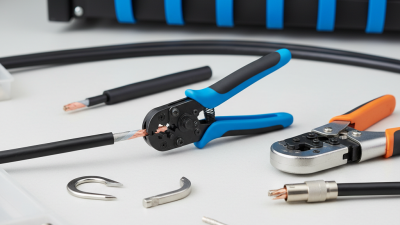
Choosing the right coax tools can make cable installation cleaner, faster, and more reliable. These tools support tasks such as cutting, stripping, terminating, testing, and maintaining coaxial cables. A poor choice may leave damaged shielding, uneven dielectric layers, or loose connectors.
Common types include coaxial cable cutters, adjustable strippers, crimpers, compression tools, connector torque wrenches, and cable testers. Each tool serves a specific purpose. For example, a rotary stripper can expose precise layers without cutting the braid. A compression tool can create a firm seal on compatible F, BNC, or RCA connectors. Torque wrenches help prevent over-tightening on equipment ports. Small details matter.
In practical installations, cable type should guide every tool decision. RG6, RG59, and specialty cables may require different stripping depths, connector sizes, or preparation methods. Experienced technicians usually check the cable diameter and connector manufacturer’s specifications before starting. They also inspect the finished connection for exposed conductors, weak compression, and signal loss. A tester can reveal problems that look invisible.
No tool is universal. That sounds obvious.
Some inexpensive tools work well for occasional repairs, while professional installations often need stronger materials, replaceable blades, and consistent adjustment. I have found that convenience can sometimes hide poor repeatability, especially with low-cost strippers. That observation is not absolute, but it deserves attention. This guide examines the top types of coax tools, their practical uses, and the selection details that affect safety, signal quality, and long-term performance.
Coaxial Cable Tools: Purpose, Design, and Basic Categories
What Are the Top Types of Coax Tools?
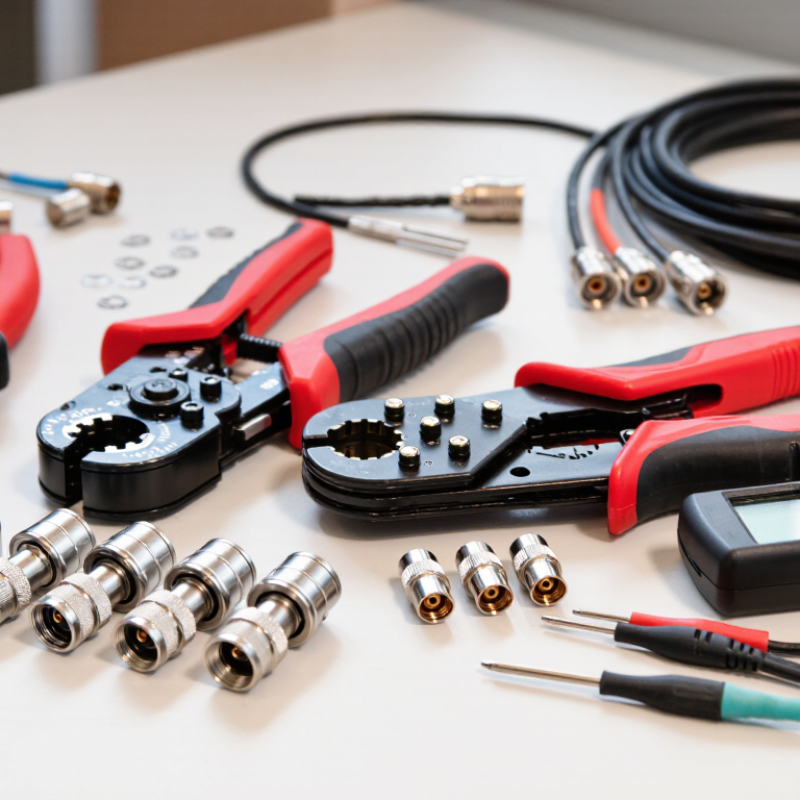
Coaxial cable tools support three basic tasks: preparing, terminating, and testing. A cable stripper removes the jacket and dielectric in measured layers. Its design matters because exposed shielding can weaken signal quality. A coax cutter creates a clean end, while a compression tool secures the connector around the cable jacket. Crimpers remain useful, but they can deform connectors when pressure is uneven. That happens often.
The connector type determines the tool category. F-type compression tools suit many broadband and video installations. BNC and N-type connectors may require different dies, gauges, or torque settings. A continuity tester checks the center conductor and shield for unwanted contact. More advanced signal meters measure insertion loss, return loss, and signal levels. These tools help technicians find faults beyond visible damage. According to Grand View Research’s 2024 coaxial cable market assessment, the sector is projected to grow at roughly 6.2% annually through 2030. More installed cable means more demand for repeatable field testing.
Tool design also affects reliability. Ergonomic handles reduce hand fatigue during repeated terminations. Adjustable strippers help accommodate different cable diameters. A calibrated torque wrench protects threaded interfaces from loose or excessive tightening. The Telecommunications Industry Association’s cabling guidance emphasizes controlled installation practices and performance verification. In practice, a cheaper tool can appear efficient, yet produce inconsistent results. I have found that speed is not always accuracy. Proper training, clean cable ends, and a final test still matter.
Cable Preparation Tools for Stripping and Cutting Coaxial Cables
What Are the Top Types of Coax Tools?
Cable Preparation Tools for Stripping and Cutting Coaxial Cables
Coaxial cable preparation starts with accurate cutting. A dedicated coax cable cutter creates a clean, square end without crushing the foam dielectric. This matters when fitting compression connectors. A damaged end can leave the center conductor uneven or weaken the connection.
Rotary coax strippers are useful for removing the jacket, braid, and dielectric in controlled layers. Many models support common cable sizes, such as RG6, RG59, and RG11. Adjustable blades help match different jacket thicknesses. The correct stripping length should follow the connector’s specifications. Too much exposed braid can cause shielding problems. Too little preparation may prevent the connector from seating fully.
A coaxial cable prep tool can also fold the braid back neatly. Some tools include a depth guide or replaceable blades. These features reduce guesswork during repeated installations. I prefer checking each cut under bright light before attaching a connector. Look for loose braid strands, a nicked conductor, or compressed insulation. Small defects are easy to miss.
Experience has taught me that speed can create waste. A tool may feel sharp, yet still remove too much material. Test it on a spare cable first. Clean blades also improve consistency and reduce pulling. For field work, a compact cutter, adjustable stripper, and connector preparation gauge cover most routine tasks. Even then, cable types vary, so one setting should never be treated as universal.
Crimping, Compression, and Connector Installation Tools
Coaxial cable work usually depends on three tool types: crimping, compression, and connector installation tools. Each one serves a different purpose. The correct choice depends on cable size, connector design, and the required connection strength. A reliable setup begins with a clean cable cut and careful jacket removal.
Crimping tools use controlled pressure to secure a connector sleeve around the cable. They work well for many indoor installations. The crimp must be firm, not crushed. Excess pressure can deform the connector and weaken signal performance.
Compression tools create a tighter, more weather-resistant seal. They are useful for outdoor runs, wall entries, and areas exposed to moisture. The connector should slide into place smoothly. Forcing it often damages the braid.
Connector installation tools may include cable strippers, preparation gauges, and insertion aids. A proper stripper removes the jacket without cutting the shield or center conductor. The braid should remain even around the dielectric. Small details matter here. Experienced technicians still make mistakes when working quickly. I have seen loose connectors caused by rushed measurements, not poor tools. Checking the cable end before crimping or compressing can prevent rework. A basic continuity test, followed by a signal check, gives stronger evidence than appearance alone. Some connections look perfect and still fail.
Testing and Troubleshooting Equipment for Coaxial Networks
Testing and troubleshooting coaxial networks requires more than one convenient meter. A basic coax cable tester checks continuity, opens, shorts, and incorrect wiring. It quickly identifies a damaged connector or broken center conductor.
For signal problems, a signal level meter measures strength at outlets, splitters, and network entry points. Unusual losses may indicate poor shielding, excessive splitting, or a loose connection. A tone generator and inductive probe can trace one cable through crowded walls or equipment cabinets. Label each cable during testing. This small step prevents costly confusion later.
A time-domain reflectometer offers deeper analysis by locating faults along the cable length. It can reveal crushed sections, water intrusion, and unexpected impedance changes. Use a termination load when the network design requires one. Disconnect active equipment before connecting test instruments, and record readings at consistent points. Field experience shows that many “signal failures” begin with badly fitted connectors, not distant network faults. However, meters can mislead when calibration is overdue or adapters are damaged. I have learned to test the instrument first. Rechecking a suspicious result is not wasted time. It may expose an assumption that seemed obvious.
What Are the Top Types of Coax Tools? - Testing and Troubleshooting Equipment for Coaxial Networks
| Tool Type | Primary Function | Typical Measurements or Results | Best Use in the Field | Key Limitation | Recommended Priority |
|---|---|---|---|---|---|
| Coax Cable Tester | Checks continuity and verifies whether the cable conductors are connected correctly. | Pass/fail status, open circuit, short circuit, shield fault, and basic wiring errors. | Fast installation checks and first-line troubleshooting. | Usually cannot identify complex signal loss, impedance problems, or the exact distance to a fault. | High |
| Tone Generator and Probe | Places an audible tracing signal on a cable so the correct cable can be identified at the other end. | Tone presence and relative signal strength during cable tracing. | Locating and labeling coaxial cables in cabinets, walls, and cable distribution areas. | Works best when the cable is accessible and the tracing environment has limited electrical interference. | High |
| Signal Level Meter | Measures the strength of radio-frequency signals at a coaxial outlet or network test point. | Signal level in dBµV or dBm, depending on the meter and system configuration. | Checking whether downstream and upstream signal levels are within the network design range. | Correct interpretation requires knowledge of the service frequencies, channel plan, and acceptable operating limits. | High |
| Spectrum Analyzer | Displays signal amplitude across a selected frequency range to reveal interference and unwanted emissions. | Frequency, signal amplitude, noise floor, ingress, harmonics, and other spectral abnormalities. | Finding interference, frequency-specific faults, and problems that a simple level meter may miss. | More advanced to operate and generally more expensive than basic continuity or level-testing tools. | Medium |
| Time-Domain Reflectometer (TDR) | Sends a test signal through the cable and analyzes reflections caused by changes in impedance. | Approximate distance to an open, short, connector fault, splice, or impedance discontinuity. | Locating hidden faults when the cable cannot be visually inspected from end to end. | Accuracy depends on the cable's velocity factor, test setup, connectors, and the type of fault. | High |
| Cable Length Meter | Estimates the physical length of a coaxial cable using electrical signal timing or capacitance-based methods. | Approximate cable length, normally shown in feet or meters. | Inventory checks, cable preparation, and identifying unexpectedly long cable runs. | Results can be affected by the cable type, velocity factor, unterminated ends, and connected equipment. | Medium |
| Return Loss or SWR Meter | Evaluates how much of a transmitted signal is reflected because of impedance mismatch. | Return loss in dB, standing-wave ratio, and sometimes reflected power. | Verifying terminations, connectors, passive components, and RF path matching. | Measurements are frequency-dependent and may require proper calibration and suitable test connections. | Medium |
| Network Analyzer | Characterizes the transmission and reflection behavior of coaxial components over a defined frequency range. | Insertion loss, return loss, impedance, phase, and related S-parameter data. | Detailed laboratory, maintenance, and advanced RF network verification. | Requires calibration, correct fixtures, and technical experience to obtain meaningful results. | Low |
| DC Voltage and Continuity Multimeter | Checks for unexpected voltage, grounding conditions, continuity, and basic electrical faults. | Voltage, resistance, continuity, and sometimes current, depending on the meter. | Safety checks and diagnosing power-related issues in systems that use powered coaxial equipment. | It is not a substitute for an RF meter because it does not show signal quality across operating frequencies. | High |
| Compression Connector Tool | Installs compression-style coaxial connectors with consistent mechanical and environmental termination. | Termination quality is evaluated through connector fit, pull resistance, shielding, and signal performance. | Creating reliable field terminations during installation or connector replacement. | Must be matched to the correct cable diameter and connector design; improper preparation can still cause faults. | High |
| Coax Cable Stripper | Removes the outer jacket and dielectric to the required dimensions before connector installation. | Consistent strip length and exposure of the conductor and shielding layers. | Preparing cables quickly while reducing damage to the braid, foil, and center conductor. | Different cable constructions require compatible blades or adjustable stripping settings. | High |
| F-Connector and Coax Crimp Tool | Attaches compatible crimp-style connectors to coaxial cable. | Mechanical crimp quality, connector retention, and continuity after termination. | Routine cable assembly and repairs where crimp connectors are specified. | Crimp dimensions must match the connector and cable; an incorrect die can produce an unreliable connection. | Medium |
| Coaxial Cable Cutter | Makes a clean, square cut through the cable without excessively deforming the conductor or dielectric. | Cut quality, conductor condition, and cable-end geometry. | Preparing clean cable ends before stripping and connector installation. | A cutter alone does not verify electrical continuity or RF performance. | High |
| Cable Certification Tester | Performs a documented set of tests to assess installed coaxial links against defined requirements. | Link loss, return loss, shielding performance, length, and pass/fail results, depending on the test platform. | Quality assurance, acceptance testing, maintenance records, and structured cabling documentation. | Test limits must be selected correctly for the cable type, frequency range, and installation standard. | Medium |
Specialized Tools for Professional Coaxial Cable Work
Professional coaxial cable work depends on specialized tools, not improvised shortcuts. A precision coax stripper removes the jacket and dielectric in controlled layers. A compression tool then secures the connector without crushing the cable. For field repairs, a calibrated torque wrench protects the interface from loose or over-tightened fittings. Small details matter.
Cable preparation also requires verification. Continuity testers identify open conductors and short circuits quickly. Signal-level meters measure downstream and upstream performance at the outlet. Sweep analyzers reveal frequency response problems that a basic tester may miss. CableLabs’ DOCSIS 4.0 specifications define downstream capacity up to 10 Gbps and upstream capacity up to 6 Gbps. Those figures make poor connector geometry harder to ignore. A damaged braid can create leakage, reflections, or unstable service.
Market evidence supports the need for disciplined installation. Grand View Research projects continued growth in the global coaxial cable market through 2030, driven by broadband and infrastructure upgrades. The FCC’s 2024 Communications Marketplace Report also identifies cable broadband as a significant fixed-access platform. In practice, the best toolkit includes a cable cutter, stripping tool, connector compression tool, torque wrench, continuity tester, and signal meter. I have learned that a clean-looking termination can still perform badly. Testing every drop is slower. Skipping it is worse. Technicians should also inspect worn blades and recalibrate meters regularly. One weakness remains: tool accuracy depends heavily on cable type, connector design, and operator technique.
Top Types of Coax Tools for Professional Cable Work
Comparison of the common coaxial cable workflow stages supported by each specialized tool type.
A cable cutter performs the initial cut, while a coax stripper prepares the outer jacket and dielectric for termination. Crimp and compression tools attach compatible connectors. A cable tester is used after installation to check electrical continuity, shorts, and connection faults. The workflow coverage values represent the number of these five common stages each tool type directly supports.
Related Posts
-
Why You Should Use Coax Tools for Better Cable Management and Performance
-
Top 5 Coax Tools Buyers Need to Know About?
-
What Are the Top Types of Coax Tools?
-
Maximize Your Network Potential with Fiber Cable Insights and Best Practices
-

Understanding the Benefits of Fiber Cable in Modern Communication Systems
-

2026 Top J Hooks for Cable Solutions What Are the Best Options?