What Is Wire Cable and Which Type Is Right for You?
Choosing the right wire cable starts with understanding what the term means. In electrical work, it may describe insulated conductors that carry power or signals. In lifting and mechanical applications, it can mean a steel wire rope built to handle tension. These products may look similar on a shelf. Their purposes are not similar.
A stranded copper wire cable bends easily around tight corners. It suits equipment that moves, vibrates, or needs repeated installation. Solid conductors provide stable routing in fixed building systems, but they resist frequent bending. Aluminum options can reduce weight and cost, although they need suitable terminals and careful installation. Steel wire rope depends on rope construction, diameter, breaking strength, and its working load limit. Small details matter.
Start with the application.
Check voltage, current, temperature, moisture, abrasion, and movement. For lifting work, calculate the expected load and use the manufacturer’s safety factors. For electrical systems, confirm insulation ratings and local installation requirements. A cable jacket exposed to sunlight can crack sooner than expected. A cable routed beside a hot motor may need a higher temperature rating.
Reliable selection should follow tested specifications, not appearance alone. Manufacturer datasheets, certification marks, and advice from a qualified electrician or engineer provide stronger guidance. I have seen simple labels create expensive mistakes. Even this explanation has limits: product names vary by region and industry. The safest choice matches the cable to the real environment, verified load, and documented performance.
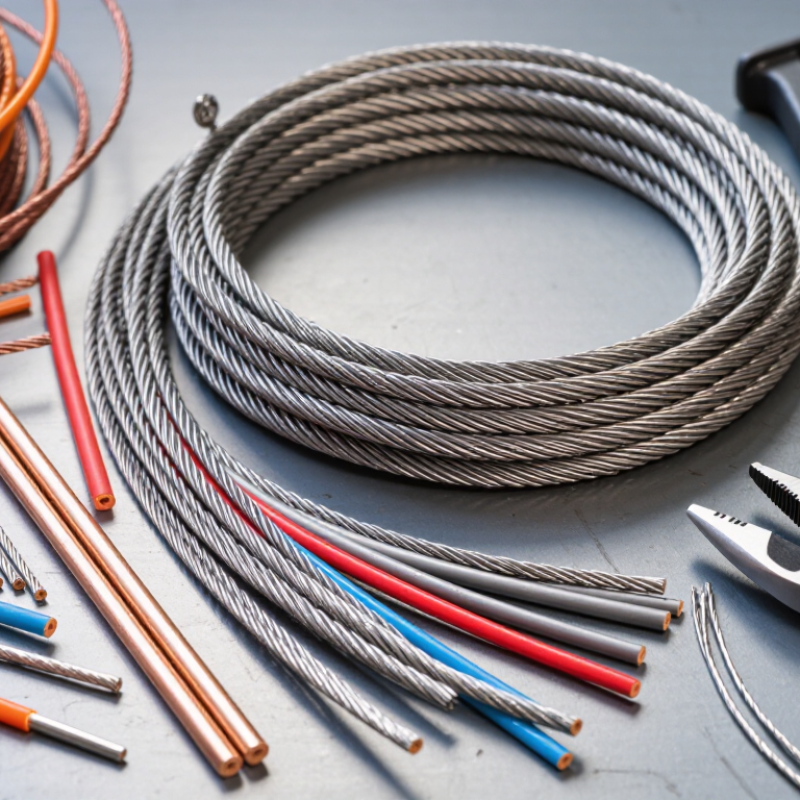
Wire Cable: Definition, Structure, and Core Functions
Wire cable is a flexible load-bearing assembly made from individual metal wires. Several wires twist into strands. The strands then wrap around a central core. This layered structure distributes tension, supports bending, and limits sudden deformation. A fiber core feels softer and bends easily. A steel core offers greater crush resistance and temperature tolerance. The choice is rarely obvious.
Its main functions are lifting, pulling, guiding, and transmitting mechanical force. Wire diameter affects breaking strength. Strand pattern affects flexibility and surface contact. Lay direction also matters because mismatched rotation can loosen attached hardware. In field inspections, I look for broken wires, flattened sections, corrosion, and birdcaging. Small damage can hide beneath grease.
Safety data makes inspection practical. OSHA 1910.184 requires removal when a wire-rope sling has six randomly distributed broken wires in one rope lay, three broken wires in one strand, or one-third diameter loss. ISO 4309:2017 also treats broken wires, corrosion, deformation, and wear as retirement indicators for crane ropes. These thresholds are useful, but they are not a substitute for site judgment. A clean-looking cable may still have internal fatigue. That is easy to miss. Records should include load history, sheave size, lubrication, and inspection dates. For frequent bending, choose a flexible rope with more wires per strand. For crushing loads, a compact steel-core design may perform better. Insufficient sheave diameter remains a common design mistake.
What Is Wire Cable and Which Type Is Right for You?
Wire cable is a conductor, usually made from copper or aluminum, surrounded by insulation or a protective jacket.
The chart compares the approximate DC resistance of common solid copper conductor sizes at 20°C. Lower resistance generally means lower voltage drop and reduced power loss over the same length.
Larger conductors have a greater cross-sectional area and lower resistance. Choose a cable type and size according to current, installation environment, flexibility, voltage drop, insulation temperature rating, and applicable electrical codes.
How Wire Cable Differs from Other Cable Types
Wire cable is a broad term, not a single engineering category. In electrical work, it usually means one or more metal conductors covered by insulation and an outer jacket. A wire rope is different. It uses many steel strands to carry tension, not electrical current. That distinction matters beside a winch, inside a control panel, or beneath a building floor.
Electrical cable is selected by voltage, current, temperature, flexibility, and installation conditions. Copper usually offers high conductivity and easy termination. Aluminum weighs less and can reduce material cost, but it needs careful connector preparation. A cable’s insulation also changes its purpose. PVC suits many general installations, while specialized insulation handles heat, oil, movement, or fire exposure. IEC 60228 classifies conductor construction, including solid and stranded forms. Stranded conductors bend better. They can still fail when repeatedly flexed beyond their rated cycle life.
Wire rope follows mechanical criteria instead. Diameter, lay, core design, breaking force, and fatigue resistance control its performance. ISO 4309 provides inspection guidance for ropes used with lifting equipment. Do not substitute it for an electrical cable. Fiber-optic cable carries data through light, while coaxial cable uses a central conductor, dielectric layer, shield, and jacket. Each design solves a different problem. MarketsandMarkets’ 2024 Wire and Cable Market report projects strong global growth through 2029, reflecting expanding power, construction, and communications demand. The U.S. Energy Information Administration reports that transmission and distribution losses commonly represent about 5% of delivered electricity. Poor cable selection can contribute to waste, heat, and early replacement. My own practical rule is simple: identify the load first, then check the environment. Guessing from appearance is fast, but often wrong.
Key Wire Cable Materials, Constructions, and Classifications
What Is Wire Cable and Which Type Is Right for You?
Wire cable selection starts with material. Galvanized carbon steel offers practical corrosion resistance and strong general performance. Stainless steel suits damp, coastal, or hygienic environments. It resists rust better, but it may cost more and can stretch differently under load. Coated cable adds a protective outer layer. That layer improves handling, though cuts or abrasion can expose the metal beneath it.
Construction changes how a cable behaves. A 1×19 construction has low flexibility but holds its shape well. It often suits bracing and straight runs. A 7×7 cable bends more easily and works for moderate movement. A 7×19 design is more flexible still. It can handle repeated bending around pulleys.
Cable cores also matter. Fiber cores provide flexibility and cushioning. Independent wire rope cores offer better crush resistance and higher stability. Small details matter.
Classifications include diameter, wire grade, lay direction, core type, and rated breaking strength. The working load must remain below that breaking strength. Safety factors are not optional. They reflect shock, wear, angle, and uneven loading. In practical inspections, look for broken wires, flattened strands, corrosion, and damaged coatings. Replace questionable cable early. It is cheaper than explaining a failure. Still, no selection chart can replace site judgment. Temperature, vibration, bend radius, and maintenance habits may change the answer. A cable that looks ideal on paper may perform poorly in a dirty, sharply bent installation.
Installation, Safety, Maintenance, and Service-Life Considerations
Wire cable, often called wire rope, must match the installation environment and working load. Flexible constructions suit pulleys and repeated movement. More compact cables resist crushing better. Galvanized steel handles general outdoor exposure, while stainless steel performs better around moisture and corrosive atmospheres. Selection should consider diameter, breaking strength, bend radius, temperature, and end fittings. A stronger cable is not automatically the safer choice.
Installation demands careful alignment.
The cable should sit correctly in grooves, without sharp bends, twists, or crushed sections. Use compatible clips, sockets, and thimbles. Never exceed the rated working load.
I have seen cables fail early because the fitting was correct, but the routing was not. Keep hands clear during tensioning, and let trained personnel inspect critical lifting systems. A clean installation can still hide internal damage.
Tips:
Inspect before each use for broken wires, flattened areas, rust, birdcaging, and loose fittings. Wipe away grit before applying suitable lubricant. Do not cover serious corrosion with paint. Record inspection dates, load conditions, and unusual noise. Service life depends on cycles, abrasion, bending, moisture, and maintenance quality. Replace the cable when damage reaches the manufacturer’s rejection criteria, even if it still appears usable. I sometimes find inspection records too vague; “looks fine” is not enough evidence.