Platinum Tools®

We Make Connections EZ!

How to Choose the Best Fiber Optic Cable Connectors?

Choosing the right fiber optic cable connectors is crucial for ensuring optimal network performance. With so many options available, it can feel overwhelming. A well-made connector enhances signal transmission and reduces loss, which is essential in high-speed communications. However, not all connectors are created equal.

When selecting fiber optic cable connectors, consider their compatibility with your existing infrastructure. Different types may support varying bandwidths and distances. Look for those known for reliability. Many users underestimate the importance of quality. Cheap connectors might save money initially but could lead to costly upgrades later.

Experience shows that investing in premium connectors often pays off. They are built to withstand environmental factors and frequent connections. However, one might occasionally choose a less-than-ideal option due to budget constraints. This decision could hinder network efficiency. It’s essential to reflect on past choices to avoid repeating mistakes.
How to Choose the Best Fiber Optic Cable Connectors?

Understanding Fiber Optic Cable Connectors and Their Types
How to Choose the Best Fiber Optic Cable Connectors?

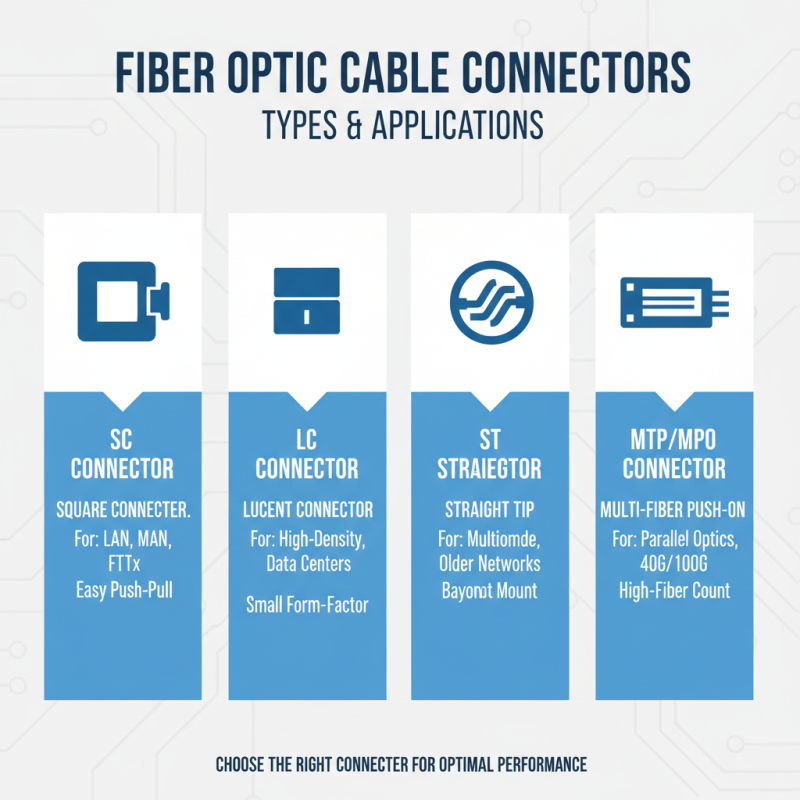
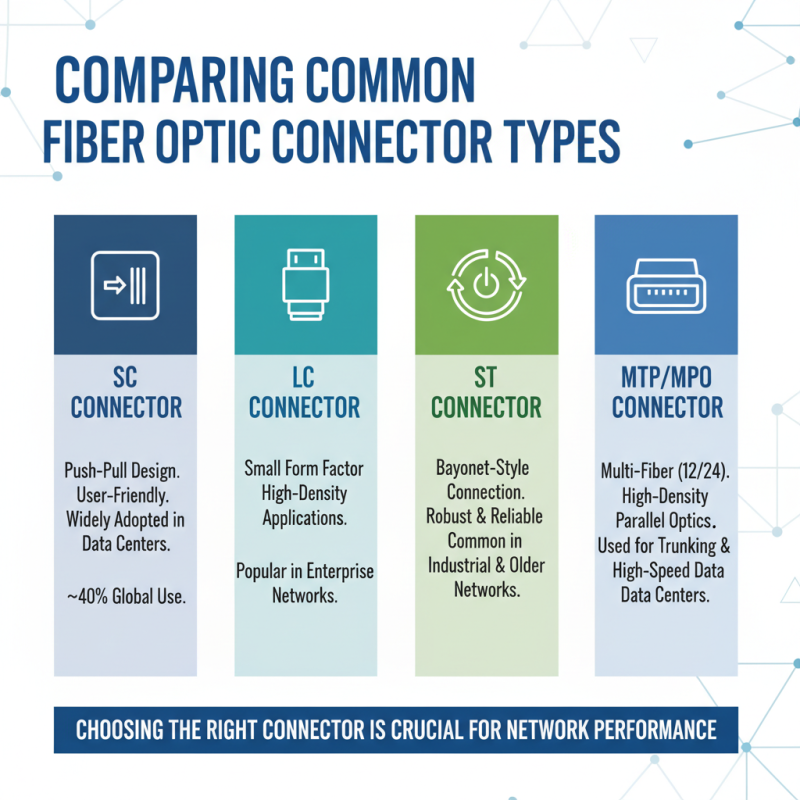
Fiber optic cable connectors play a crucial role in data transmission. Understanding the types is essential for optimal performance. Common types of connectors include SC, LC, ST, and MTP. Each connector serves specific needs based on applications and environments.

SC connectors are robust and easy to use. They are ideal for high-density applications. LC connectors, being smaller, are popular for high-capacity setups. ST connectors utilize a bayonet-style coupling mechanism, often used in networking. MTP connectors support multiple fibers and are essential for high-speed networks.

Choosing the right connector can be daunting. Users may overlook key aspects, such as compatibility and future scalability. Factors like installation environment and maintenance needs can impact performance. It's wise to reflect on current requirements and anticipate future growth. Analyze the specific application before making a decision.
Key Factors in Choosing Fiber Optic Cable Connectors

When selecting fiber optic cable connectors, several key factors must be considered to ensure optimal performance. The type of connector is crucial. Common options include SC, LC, ST, and MTP. Each serves specific applications. The choice impacts signal loss and installation ease. Understanding the environment is equally important. Different settings may require connectors with varying durability and resistance to moisture or dust.

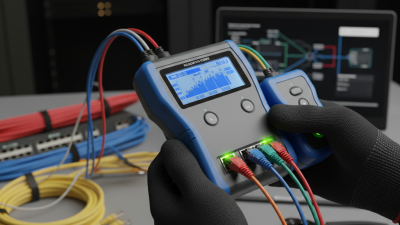
One must also assess the compatibility with existing systems. Mismatched connectors can lead to connectivity issues. Even a slight difference in connector type can result in significant performance degradation. Consider testing equipment that is available. Measurement tools can verify whether the connectors meet specified standards.

Finally, look into the quality of materials used. High-quality connectors made from durable materials tend to provide better long-term performance. However, cost can be a limiting factor. Finding a balance between budget and quality is essential. Rely on expert recommendations and peer reviews to guide your choice.

Comparing Common Connector Types: SC, LC, ST, and MTP

How to Choose the Best Fiber Optic Cable Connectors?

When choosing fiber optic cable connectors, understanding common types is crucial. SC, LC, ST, and MTP connectors each serve different needs in networking. The SC connector offers a push-pull design, making it user-friendly. It's widely adopted in data centers, with reports showing it makes up about 40% of all connectors used globally.

LC connectors, on the other hand, are compact, ideal for high-density applications. They utilize a simple latch mechanism. This design allows for more ports in less space, appealing to modern network designs. Interestingly, the demand for LC connectors has seen a 25% increase in recent years, primarily due to the rising need for efficient data transmission.

The ST connector, although less common now, features a bayonet mount. It is robust but lacks the compactness of newer options. MTP connectors, which enable multi-fiber connections, offer a high-performance solution for large-scale deployments. A study highlighted that MTP connectors can save up to 75% in installation time compared to traditional methods. While these options have great advantages, each has its challenges, such as compatibility issues or installation complexity, highlighting the need for careful consideration in selection.

Evaluating Performance Specifications of Fiber Optic Connectors

When selecting fiber optic cable connectors, understanding performance specifications is crucial. Connectors play a vital role in network reliability and data transmission efficiency. Key specifications to consider include insertion loss, return loss, and operating temperature range. Insertion loss should ideally be below 0.3 dB in single-mode fibers and below 0.5 dB for multimode fibers. Reports indicate that a 1 dB increase in insertion loss can result in a 20% decrease in network performance.

Return loss measures the reflected light at the connector interface. A lower return loss, ideally greater than 40 dB, indicates better performance. This ensures that minimal light is lost, preserving signal integrity across distances. Operating temperature ranges can impact long-term reliability. Connectors should withstand temperature extremes from -40°C to 85°C according to industry standards. Poor choices in these specifications could lead to network issues.

Testing and manufacturing certifications, such as ISO/IEC standards, should guide your selections. Proper testing in real-world conditions can reveal potential weaknesses. For instance, connectors that perform well in laboratory settings might not fare as well in harsh environments. Consider the long-term implications of your choices. Each decision shapes the network's future performance. Balancing cost with quality and reliability is crucial yet challenging.

How to Choose the Best Fiber Optic Cable Connectors? - Evaluating Performance Specifications of Fiber Optic Connectors

Connector Type Insertion Loss (dB) Return Loss (dB) Operating Temperature (°C) Housing Material Typical Applications
LC 0.1 -50 -40 to 85 Plastic Data Centers
SC 0.2 -50 -40 to 75 Ceramic Telecommunications
ST 0.3 -40 -20 to 70 Plastic Industrial Networking
FC 0.15 -40 -40 to 70 Metal Laboratory Applications
MTP/MPO 0.5 -20 -20 to 70 Plastic High-Density Applications

Installation and Maintenance Tips for Fiber Optic Connectors

Choosing the right fiber optic connectors is crucial for effective communication. Proper installation and maintenance ensure optimal performance. According to industry reports, poorly installed connectors can result in over 80% signal loss. This is a stark reminder of the importance of precision in installation.

When installing connectors, cleanliness is vital. Dust and debris can hinder light transmission. Use lint-free wipes and isopropyl alcohol to clean the connectors before installation. Always inspect the alignment of fibers as any misalignment can lead to significant losses. Remember to avoid over-tightening, which can damage the cable.

Maintenance is equally important. Regular testing can catch issues early. A study indicates that 30% of optical network failures are related to connector problems. Schedule regular inspections to ensure optimal performance. Use visual inspection tools to check for scratches or contamination, which can cause problems over time. Staying proactive can save time and money in the long run.

Cut Strip Terminate Test